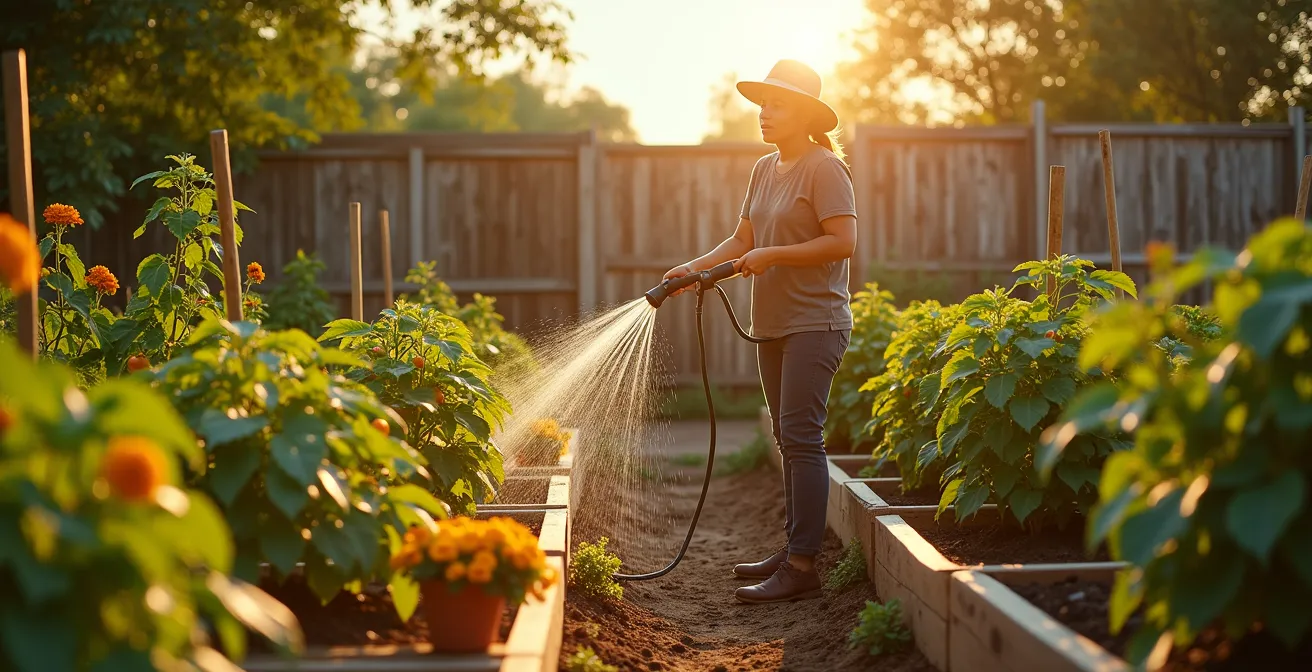
The greatest mental health benefit of gardening comes not from choosing between vegetables or flowers, but from embracing the mindful process of nurturing plant life itself.
- Technical gardening challenges, like managing soil pH or pests, are opportunities to practice presence and problem-solving, which directly counteracts feelings of burnout and anxiety.
- The sensory experience of gardening—touching soil, watering, observing growth—provides a powerful grounding effect that calms the urbanite’s overstimulated nervous system.
Recommendation: Instead of focusing on a perfect harvest, choose a plant that interests you and commit to observing and responding to its needs. The therapy is in the tending, not the outcome.
In the constant hum of the city, finding a quiet space for the mind can feel like a radical act. Many urbanites, searching for an anchor in the storm of daily demands, turn to hobbies to decompress. The question often arises: what is the best way to cultivate peace? For those drawn to gardening, the debate seems to be between the practical pursuit of growing vegetables and the aesthetic joy of cultivating flowers. We weigh the satisfaction of food security against the beauty of a bloom.
Conventional wisdom tells us that any connection to nature is beneficial. We’re told to get our hands dirty, enjoy the fresh air, and appreciate the satisfaction of seeing something grow. While true, this advice barely scratches the surface. It misses the deeper, therapeutic mechanisms at play. What if the real question isn’t *what* you grow, but *how* you engage with the process? What if the key to unlocking gardening’s profound stress-reducing benefits lies not in the final product, but in the mindful, moment-to-moment practice of care?
This is the perspective of horticultural therapy: that the act of tending to a living thing offers a powerful mirror for tending to ourselves. It’s about finding calm not in a perfect outcome, but in the patient process of solving small, tangible problems. This guide explores this idea by reframing common gardening challenges not as obstacles, but as lessons in mindfulness, presence, and letting go. We will dig into the science and soul of gardening to reveal how it truly heals a stressed and scattered mind.
For those who appreciate a more personal perspective on well-being, the following video explores another powerful way to foster connection and overcome the isolation that often accompanies modern life, complementing the grounding practice of gardening.
In the sections that follow, we will explore specific, practical aspects of gardening. Each topic, from soil chemistry to pest control, will be examined through the lens of mental wellness, demonstrating how these technical skills are, in fact, powerful tools for cultivating a more peaceful and rooted state of being.
Summary: The Gardener’s Path to Inner Peace
- Why Your Tomatoes Will Never Grow in Alkaline Soil?
- How to Prevent Leggy Seedlings Using Grow Lights?
- Terra Cotta or Plastic Pots: Which Retains Moisture Better?
- The Watering Mistake That Kills More Houseplants Than Drought
- Problem and Solution: Using Marigolds to Repel Pests Naturally
- Why Entrepreneurial Burnout Hits Harder Than Corporate Stress?
- How to Apply Permaculture Principles to Restore Degraded Landscapes?
- How to Grow a Year’s Worth of Herbs on a Single Vertical Wall?
Why Your Tomatoes Will Never Grow in Alkaline Soil?
The first lesson in gardening is a lesson in listening. You may have the perfect sunny spot and the most beautiful tomato starts, but if the soil is wrong, they will struggle. Tomatoes, like many plants, are sensitive to soil pH. They thrive in slightly acidic conditions, where the optimal range for nutrient uptake is a pH of 6.0-6.8. In alkaline soil (pH above 7.0), essential nutrients like iron and manganese become chemically locked up and unavailable to the plant’s roots. The plant is surrounded by food it cannot eat. You’ll see the evidence in its leaves: a tell-tale yellowing with green veins, a sign of malnourishment.
From a therapeutic perspective, this isn’t a failure; it’s an invitation to mindful observation. The plant is communicating a need. Responding isn’t about forcing your will, but about creating the right conditions for life to flourish. This is a profound antidote to the feeling of powerlessness that often accompanies stress. Instead of wrestling with abstract problems, you are faced with a tangible one: the soil is out of balance. Your task is to gently guide it back.
This process of testing and amending the soil becomes a grounding ritual. It forces you to slow down, to engage with the elemental foundation of the garden, and to understand that growth is a partnership. You provide the right environment, and the plant does the rest. It’s a quiet, powerful practice in creating supportive systems, rather than demanding outcomes.
How to Prevent Leggy Seedlings Using Grow Lights?
There is a special kind of hope in a newly sprouted seed. But for many indoor gardeners, that hope quickly turns to anxiety as seedlings stretch desperately toward a distant window, becoming pale, thin, and “leggy.” This happens when a young plant receives enough light to survive, but not enough to thrive. It expends all its energy on growing tall in search of more light, neglecting to build a strong stem and healthy leaves. These seedlings rarely mature into robust plants; they are too fragile to support themselves.

Preventing this involves providing consistent, direct light, often with the help of grow lights positioned just a few inches above the plants. This is a lesson in providing the right kind of support. It isn’t about intensity, but about consistency and proximity. Like a person navigating a difficult time, the seedling doesn’t need a blinding, occasional flash of help; it needs a steady, reliable source of energy to build its own strength from the ground up. The act of adjusting the lights, ensuring each small plant is bathed in what it needs, is a meditation on nurturing.
For the urbanite juggling multiple demands, this simple task offers a moment of focused care. You are not just growing a plant; you are cultivating resilience. Watching the seedlings respond by growing stout and strong provides a tangible win, a visible representation of what happens when the correct support is consistently applied. It’s a quiet reminder that with the right foundation, even the smallest beginnings can develop unshakable strength.
Terra Cotta or Plastic Pots: Which Retains Moisture Better?
The container you choose for your plant is more than a vessel; it defines the relationship you will have with it. This is most evident in the choice between classic terra cotta and modern plastic. From a purely technical standpoint, the difference lies in moisture retention. Porous terra cotta breathes, allowing water to evaporate through its walls. This means the soil dries out faster, requiring more frequent watering. Plastic, being non-porous, holds moisture for much longer.
But from a horticultural therapy perspective, this choice is about aligning the plant’s needs with your own personality and desired level of engagement. Are you a “Nurturer” who finds calm in a daily ritual, or a “Pragmatist” who needs a more forgiving system? There is no right answer, only what is right for you and your mental state.
The following table frames this choice not just technically, but in terms of its mental health impact, linking the material to the experience it creates.
| Aspect | Terra Cotta | Plastic | Mental Health Impact |
|---|---|---|---|
| Moisture Retention | Lower – needs daily watering | Higher – retains water 2-3x longer | Terra cotta creates a daily mindfulness ritual. |
| Sensory Experience | Rich tactile feedback, weight, temperature | Lightweight, minimal sensory input | Terra cotta provides sensory grounding through touch. |
| Forgiveness Level | Low – requires consistent attention | High – forgiving of missed waterings | Plastic reduces anxiety for beginners. |
| User Personality Match | The ‘Nurturer’ type | The ‘Pragmatist’ type | Choose based on desired engagement level. |
Choosing a pot becomes an act of self-awareness. Opting for terra cotta is a commitment to a daily check-in, a moment of connection that forces you out of your head and into the physical world. Choosing plastic, on the other hand, is an act of self-compassion, acknowledging a busy schedule and reducing the pressure to be perfect. Both are valid paths. The key is to make the choice consciously, understanding that you are designing a routine that should reduce stress, not add to it.
The Watering Mistake That Kills More Houseplants Than Drought
The most common way we fail our plants is not through neglect, but through an excess of care. Overwatering is the number one killer of houseplants, a quiet tragedy born from good intentions. When roots are constantly saturated, they cannot access oxygen and begin to rot. The plant suffocates, even as it is drenched in what we believe to be life-giving water. This paradox holds a profound lesson for anyone struggling with anxiety or a need to control.
As horticultural therapist Dr. Chris Williams notes, this act is often a reflection of our own inner state. He explains it this way:
Overwatering is a physical manifestation of anxiety: the need to ‘do something’, to over-control. Learning to let the soil dry is a practical, powerful lesson in ‘letting go’ and trusting a natural process.
– Dr. Chris Williams, University of Melbourne, Burnley Campus
The practice of checking the soil before watering—pushing a finger an inch or two deep to feel for moisture—becomes an exercise in patience and trust. It is an act of resisting the anxious urge to “fix” something that isn’t broken. This small ritual breaks the cycle of over-involvement and teaches one of the most difficult lessons: sometimes, the most helpful action is no action at all. It’s about trusting the natural rhythms of drying and soaking. This simple, repetitive practice of mindful restraint has a measurable calming effect. In fact, a 2011 study found that 30 minutes of gardening showed significantly stronger cortisol decreases than reading for the same amount of time.
Problem and Solution: Using Marigolds to Repel Pests Naturally
When pests appear in the garden, our first instinct is often to declare war. We reach for sprays and solutions designed to eradicate the problem, viewing these insects as an invading force. This confrontational approach, however, often creates more stress and can disrupt the garden’s delicate ecosystem. A more peaceful, and often more effective, strategy comes from the principle of companion planting: using certain plants to naturally protect others.
The classic example is planting marigolds among tomato plants. Marigolds release a chemical from their roots that is toxic to root-knot nematodes, a common tomato pest. Above ground, their strong scent can confuse and repel other pests like tomato hornworms. This isn’t about annihilation; it’s about creating a balanced, cooperative community where plants work together to create a resilient environment. It shifts the gardener’s role from a fighter to a diplomat, an architect of a harmonious system.
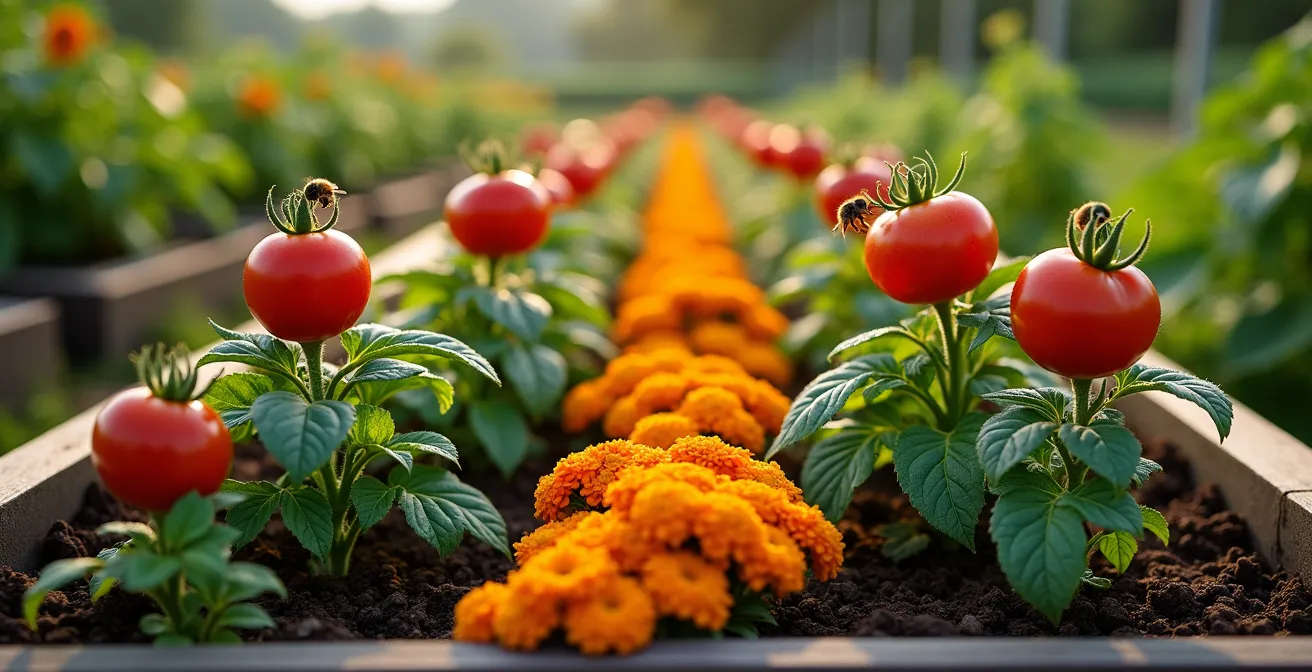
This approach is a powerful metaphor for managing stress in our own lives. Instead of trying to eliminate every source of conflict, we can learn to build supportive systems that make us more resilient. Who are the “marigolds” in your life? What practices or relationships help protect your well-being? Embracing this process over product mindset changes the goal from a “pest-free” garden (an impossible, stressful standard) to a “balanced” garden, where life and challenges coexist in a healthy equilibrium. It’s a lesson in working *with* nature, not against it.
Why Entrepreneurial Burnout Hits Harder Than Corporate Stress?
Entrepreneurial burnout is a unique and insidious form of exhaustion. Unlike corporate stress, which is often tied to external demands, entrepreneurial stress is deeply personal. The business is an extension of the self, and its struggles feel like personal failings. The pressure is constant, the wins feel fleeting, and the work is abstract, often living inside a screen. This disconnection from tangible progress can lead to a profound sense of depletion and a crisis of meaning.
Gardening offers a powerful, grounding antidote to this specific type of burnout. It pulls the entrepreneur out of the abstract digital world and into the physical one. The work is simple, manual, and produces visible, undeniable results. A weed pulled is a task completed. A seed sprouted is a success you can see and touch. As research from Penn State Extension shows, this connection to tangible growth has a real impact; it found that 1 in 3 Americans garden, with daily gardeners rating significantly higher life satisfaction. For an entrepreneur starved of clear wins, a fast-growing radish can offer more validation than a fluctuating sales chart.
The garden demands a different kind of attention—a slow, observant presence that is the polar opposite of the frantic, multi-tasking mindset of a startup founder. It re-teaches the value of small, consistent efforts and reconnects the individual to the satisfaction of manual work and the rhythm of the seasons. It provides a sanctuary where the goal is not to scale, but simply to grow.
Action Plan: Gardening as an Entrepreneurial Burnout Recovery Protocol
- Start small with one 4×4 foot raised bed to avoid overwhelming yourself. The goal is relief, not another high-pressure project.
- Schedule daily 15-minute garden checks as non-negotiable ‘offline’ time. Leave your phone behind.
- Focus on fast-growing crops like radishes or lettuce for quick, tangible wins that boost morale.
- Use manual tools instead of powered equipment. The repetitive, physical motion is meditative and grounding.
- Track progress with photos weekly. This creates a visual log of achievement, countering the feeling of stagnant progress.
How to Apply Permaculture Principles to Restore Degraded Landscapes?
Permaculture is often associated with large-scale, ecological design, but its core principles offer a profound framework for cultivating personal mental wellness. At its heart, permaculture is about designing systems that are sustainable, resilient, and work in harmony with nature. It’s about observing patterns, using resources wisely, and creating diverse, self-regulating ecosystems. This philosophy provides a perfect map for restoring not just a degraded landscape, but a depleted inner world.
The very act of engaging with the soil is restorative. As therapist Hannah Brents, LICSW, states, “Putting your hands in the soil releases feel good chemicals in the brain and grounds the nervous system.” This sensory grounding is the first step. From there, we can translate permaculture’s design principles directly into a mental health toolkit.
Consider this translation:
| Permaculture Principle | Garden Application | Mental Health Translation |
|---|---|---|
| Observe and Interact | Watch natural patterns before acting | Practice mindfulness and presence. |
| Catch and Store Energy | Harvest rainwater, compost | Build emotional reserves during good times. |
| Obtain a Yield | Ensure productive output | Set achievable goals for dopamine rewards. |
| Use Small and Slow Solutions | Start with small garden patches | Break overwhelming tasks into manageable steps. |
| Value Diversity | Plant polycultures | Cultivate varied coping strategies. |
By applying these principles to our lives, we shift from a reactive, crisis-management mode to a proactive, design-oriented one. We learn to observe our own energy levels, store emotional reserves when we feel strong, and value a diverse set of coping skills rather than relying on just one. Gardening becomes the practice ground for this new way of living—a small, slow solution that yields profound results for our inner landscape.
Key Takeaways
- The true therapeutic value of gardening is in the mindful process of care, not the final product of vegetables or flowers.
- Simple gardening tasks are practical lessons in letting go of control, practicing patience, and building resilience.
- The sensory experience of working with soil, water, and plants provides a powerful grounding effect that calms an anxious nervous system.
How to Grow a Year’s Worth of Herbs on a Single Vertical Wall?
For the modern urbanite, the biggest barrier to gardening is space. But the desire for green, living things persists. The vertical herb garden is the elegant solution, a testament to the principle of “small and slow solutions.” It transforms a sterile wall into a living, fragrant, and productive ecosystem. More than just a clever use of space, it’s a direct infusion of sensory wellness into the home environment.
Herbs are particularly well-suited for this. They are relatively easy to grow, require minimal space, and offer an immediate return on investment through flavor and aroma. The simple act of running your hand over a rosemary or basil plant and inhaling the scent can be a micro-dose of aromatherapy, instantly cutting through the stress of a workday. This isn’t just a pleasant experience; it’s backed by science. For instance, neuroscience research demonstrates that lavender exposure triggers deep, slow-wave sleep patterns.
Case Study: Urban Vertical Herb Gardens for Year-Round Mental Health
This immediate, accessible benefit was highlighted in a recent study. A 2023 University of Colorado study found that even novice gardeners with vertical herb walls experienced measurable mental health benefits. Participants reported that having immediate access to the aromas of basil, mint, and rosemary provided small but frequent moments of stress relief throughout the day. The study confirmed that even apartment dwellers with limited space saw decreased anxiety levels, with those most stressed initially showing the greatest improvements.
A vertical herb wall becomes more than a garden; it’s an interactive wellness installation. It provides a tangible connection to the food we eat, a source of daily sensory delight, and a constant, quiet reminder that growth is possible even in the most constrained environments. It is the ultimate expression of how gardening can adapt to heal us, right where we are.
Your journey to a more grounded life doesn’t require a large yard or years of experience. It begins with a single pot, a handful of soil, and the willingness to pay attention. Start today by choosing one small plant, and discover the quiet, profound wisdom it has to offer.