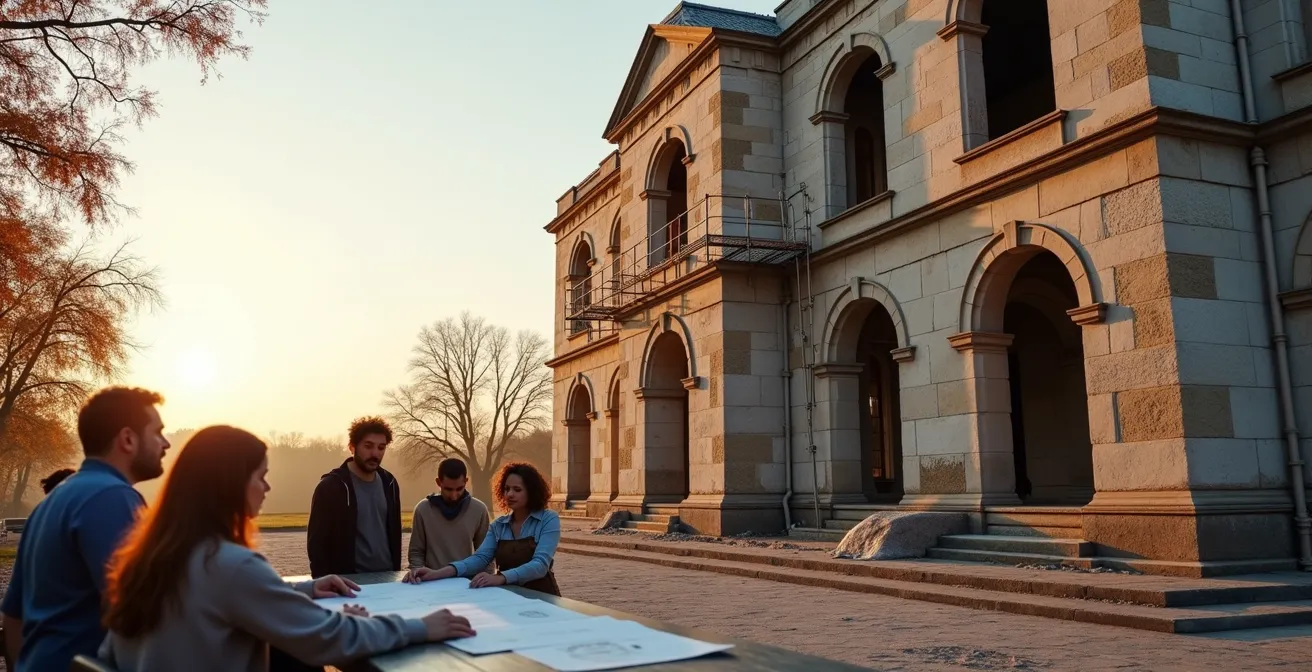
Successfully crowdfunding a heritage project hinges on translating complex, often invisible, technical needs into compelling and transparent investment stories.
- Traditional fundraising often fails because it focuses on the aesthetic outcome, neglecting the crucial—and costly—conservation science that truly saves a building.
- Modern backers, whether donors or equity investors, respond to tangible transparency, clear problem-solving, and a narrative that connects material choices to long-term value.
Recommendation: Shift your campaign’s focus from “saving a landmark” to “investing in the technical soul of heritage,” making every detail, from lime mortar to wood treatment, a key part of the story.
For historians, preservationists, and owners of historic properties, the challenge is timeless: how to secure the necessary funds to protect our built heritage from the twin threats of time and modernization. While grant applications and large-donor philanthropy have long been the primary avenues, they are often insufficient, highly competitive, and slow. Modern crowdfunding has emerged as a powerful alternative, democratizing patronage and allowing communities to invest directly in the landmarks they cherish. However, many campaigns struggle, not for lack of passion, but for a failure to communicate the true nature of preservation work.
The common advice—to “tell a compelling story”—often leads to generic narratives about a building’s past glory. This approach overlooks the most critical and expensive aspects of a project: the technical, methodical, and often “unglamorous” work required to ensure a structure’s long-term survival. We discuss concepts like adaptive reuse, from creating a museum to a boutique hotel, and the vital importance of intangible assets like oral traditions. But the core challenge remains translating the science of conservation into a narrative that resonates financially.
This guide takes a different approach. We will move beyond the surface-level story and focus on the ‘technical soul’ of preservation. The true key to unlocking crowdfunding success lies not in just showing a beautiful facade, but in revealing the intricate work that happens within the walls. It’s about making the invisible valuable, explaining why the choice of mortar is as compelling as the building’s history, and reframing complex conservation as a transparent and worthy investment.
By mastering this art of technical storytelling, you can transform a list of costly repairs into a powerful narrative of stewardship, expertise, and lasting impact. This article will guide you through the strategies needed to fund not just the landmark, but its very essence, ensuring it endures for generations to come.
Summary: Crowdfunding Strategies for Technical Heritage Preservation
- Why Preserving Buildings Is Useless If We Lose the Oral Traditions?
- How to Re-point Historic Brickwork Without Trapping Moisture?
- Museum or Boutique Hotel: Which Reuse Saves the Building Best?
- The Cement Error That Destroys Historic Lime Plaster
- Problem and Solution: Insulating Historic Windows Without Changing the Look
- Linen vs. Cotton Canvas: Which Is Worth the Investment for Archival Quality?
- How to Treat Reclaimed Wood to Prevent Termites and Rot?
- How Can Cultural Institutions Drive Economic Revitalization in Post-Industrial Cities?
Why Preserving Buildings Is Useless If We Lose the Oral Traditions?
A historic building is more than its physical structure; it’s a vessel for memory, culture, and community identity. This concept of a “Heritage Ecosystem” is fundamental to successful crowdfunding. Backers are not just investing in bricks and mortar; they are investing in the continuation of a story. A campaign that only focuses on physical restoration misses a powerful opportunity to connect with donors on a deeper, more emotional level. Preserving the intangible heritage—the oral histories, traditions, and community memories associated with a site—gives the physical structure its soul and its fundraising appeal.
Integrating this dual focus requires a deliberate strategy. A compelling campaign can create two distinct but interconnected funding streams: one for the tangible work of restoration and another for the intangible work of documentation. For example, a project could seek funds to repair a roof while simultaneously funding a project to record the stories of the people who worked or lived under it. This approach broadens the project’s appeal, engaging both those interested in architecture and those passionate about cultural history.
A prime example of this model in action is the Canadian government’s digital heritage platform. Many featured projects successfully combine the physical and the digital, presenting not just the building but also a rich narrative about its history and importance to the community, often through video and storytelling components. To implement this, consider a “dual-stream” campaign with tiered rewards that reflect both aspects, such as offering backers a digital collection of recorded stories or funding an apprenticeship for a traditional craft. This reframes the project from a simple repair job to a holistic act of cultural preservation.
How to Re-point Historic Brickwork Without Trapping Moisture?
One of the most common—and critical—tasks in masonry preservation is re-pointing, or replacing the mortar between bricks. Using the wrong material, such as modern Portland cement on a historic structure built with soft lime mortar, is a catastrophic error. Cement is harder and less breathable than lime mortar, trapping moisture within the brick and causing it to spall and decay from the inside out. This is a perfect example of an “invisible value” proposition: the correct technical choice is not about aesthetics, but about the building’s long-term survival. The challenge is making this technical necessity a compelling part of your crowdfunding narrative.
This is where the principle of “Tangible Transparency” becomes a powerful fundraising tool. Instead of just stating you need funds for “brickwork repair,” create a narrative around the “Heritage Detective” work involved. Show backers the damage caused by past mistakes. Use macro photography and short videos to explain the science: “This is what happens when moisture gets trapped. By using traditional lime mortar, we allow the building to breathe, ensuring its stability for another century.”
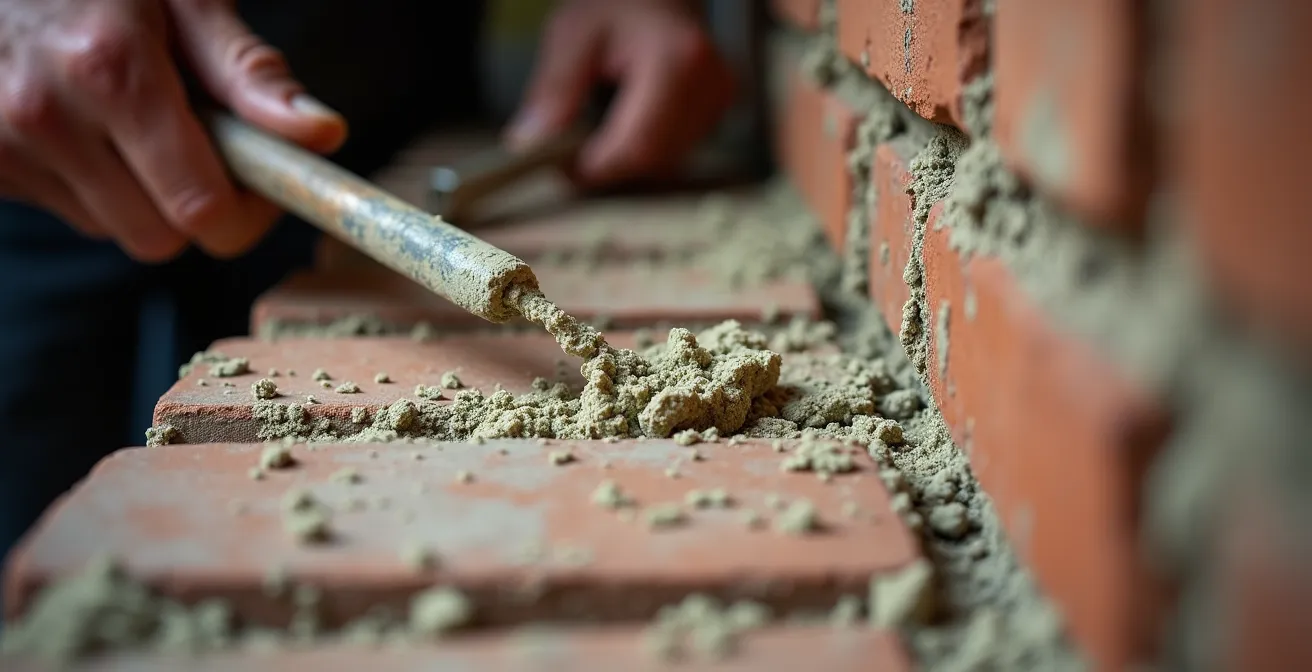
This educational approach builds immense trust and demonstrates expertise. You are not just asking for money; you are inviting backers to participate in a meticulous act of conservation. It transforms a mundane repair into a story of rescue and righting a past wrong. Data consistently shows this transparency pays off. Projects that provide regular, detailed updates on their progress and explain how funds are being used often significantly outperform their initial goals, with some studies suggesting that transparent campaigns can raise up to 126% more funds. By making the technical process visible and understandable, you empower your donors and turn them into educated advocates for your project.
Museum or Boutique Hotel: Which Reuse Saves the Building Best?
When a historic building can no longer serve its original function, adaptive reuse is often the only path to preservation. The choice of new use, however, fundamentally shapes the funding model. The two most common paths—a non-profit cultural space like a museum or a for-profit venture like a boutique hotel—rely on entirely different crowdfunding strategies and appeal to different types of “Investor-Patrons.” Understanding this distinction is critical before launching any campaign.
A museum or community center typically relies on donation-based crowdfunding. Backers are patrons of the arts and community, motivated by civic pride and a desire for public benefit. Their return on investment is social and emotional, often accompanied by a tax deduction. In contrast, converting a building into a boutique hotel or commercial space opens the door to equity crowdfunding. This model, often governed by regulations like the SEC’s Regulation Crowdfunding (Reg CF) in the US, allows a project to solicit actual investment from the public. Backers become part-owners, motivated by the potential for financial returns alongside the satisfaction of saving a landmark.
The case of the Gut Weissenhaus estate in Germany provides a powerful example of the for-profit model’s potential. This historic complex, with buildings dating to the 16th century, was transformed into a luxury resort. An equity crowdfunding campaign successfully raised €7.5 million to complete the project, which now includes a Michelin-starred restaurant and is economically self-sustaining. This model creates jobs and drives tourism, offering a different, yet equally valid, form of community benefit.
The decision depends entirely on the building, its location, and the community’s goals. The following table breaks down the core differences in the investment models:
| Aspect | Museum (Non-Profit) | Boutique Hotel (For-Profit) |
|---|---|---|
| Crowdfunding Model | Donation-based | Equity crowdfunding (Reg CF) |
| Investor Returns | Tax deductions | Potential profit sharing |
| Funding Limit | Unlimited donations | Up to $5 million (as of 2021) |
| Community Benefit | Public access, education | Economic development, jobs |
| Sustainability | Grant-dependent | Self-sustaining revenue |
The Cement Error That Destroys Historic Lime Plaster
Similar to the issue with brickwork, one of the most destructive modern interventions in historic interiors is the application of cement-based plaster or repair patches over traditional lime plaster. Lime plaster is soft, flexible, and vapor-permeable, meaning it allows the wall to breathe. Hard, impermeable cement traps moisture, causing the original lime plaster to deteriorate, leading to delamination, salt crystallization, and eventual collapse of the historic fabric. This is a technical problem that requires a nuanced “Technical Storytelling” approach to secure funding.
The average donor will not understand the chemical differences between cement and lime. Your campaign’s job is to translate this technical issue into a clear, urgent, and solvable problem. Frame the narrative as a rescue mission. Start with the “crime scene”: show close-up photos of bubbling paint, crumbling plaster, and powdery efflorescence. Explain in simple terms: “An improper repair made decades ago is suffocating this historic wall. We need to act now to remove the damaging cement and allow the original structure to breathe again.”
This approach connects directly with the core motivation of donors. As the National Trust for Historic Preservation astutely points out, people give when they feel their contribution can make a tangible difference. Your campaign must explicitly show them how.
People give because they feel passionate about a cause and because they believe they can make a difference. When you ask for money (whether it’s a fundraising letter or grant application), highlight the work you are doing to make a difference and tell your donor specifically how their funds will help.
– National Trust for Historic Preservation, How to Fund Your Preservation Project
To make the solution tangible, offer rewards that are thematically connected. Instead of generic T-shirts, offer small samples of the traditional lime plaster mix, a workshop on historic plastering techniques, or a downloadable guide on common preservation mistakes to avoid. This not only raises funds but also educates your community of backers, turning them into more knowledgeable stewards of heritage.
Problem and Solution: Insulating Historic Windows Without Changing the Look
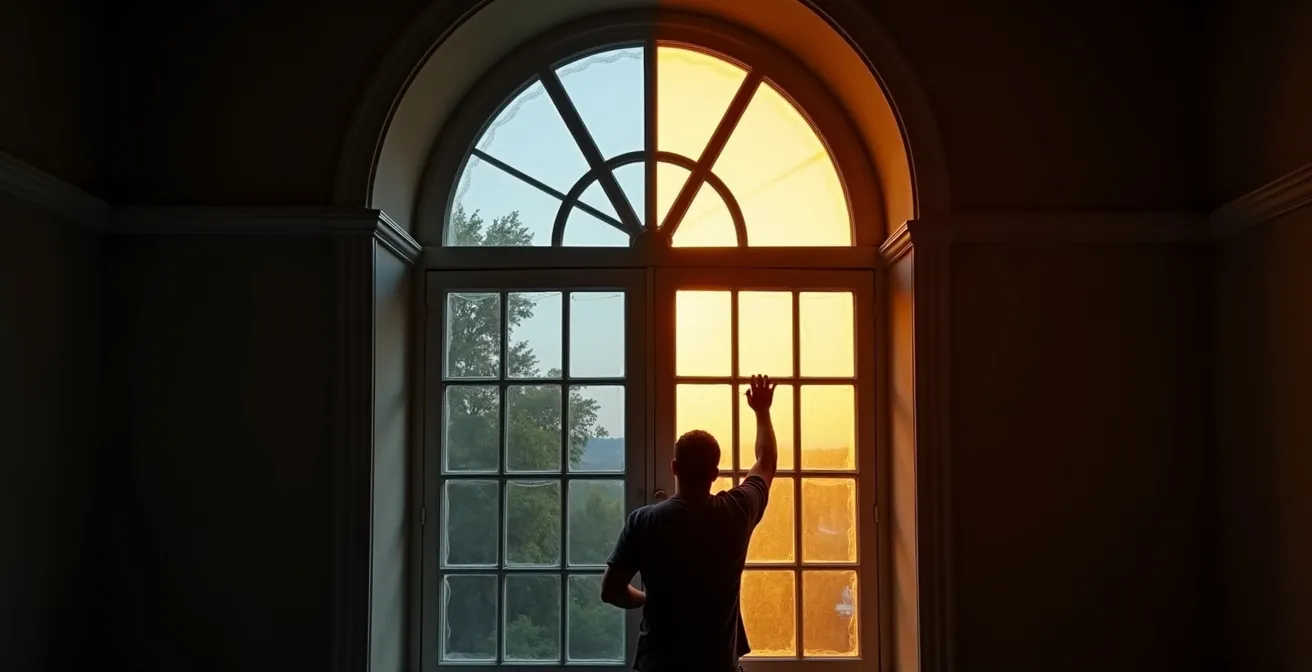
A major conflict in heritage preservation is the clash between preserving historic character and meeting modern energy efficiency standards. Original single-pane windows are a key feature of a building’s aesthetic but are notoriously inefficient. Replacing them with modern double-glazed units is often architecturally unacceptable and forbidden on protected structures. This presents a perfect crowdfunding opportunity: funding an innovative, “invisible” solution that solves a modern problem without compromising historical integrity.
The solution often lies in high-tech but discreet technologies, such as professionally installed interior storm windows or advanced, transparent insulation films that are nearly invisible once applied to the original glass. The fundraising challenge is to make a compelling case for a product that, by design, cannot be seen. Your narrative should pivot from “new windows” to “smart preservation.” Frame it as an investment in sustainability that respects the past. Use metrics to tell the story: “This technology will reduce the building’s heating costs by 30% and cut its carbon footprint, all while preserving the original 19th-century windows you see today.”
Partnerships can be crucial here. Collaborating with a startup or a company specializing in heritage-sensitive technology can add credibility and provide access to resources. The success of firms like Open Heritage, which partnered with museums to digitize artifacts, shows that collaboration enhances credibility and attracts investment. A similar partnership for window insulation could involve co-branded marketing materials, expert testimonials, and even in-kind donations of materials or labor. Such collaborations demonstrate a forward-thinking approach that appeals to a broader range of backers, including those focused on environmental causes. Indeed, a significant portion of crowdfunding is driven by social and environmental missions, making this a powerful angle to pursue.
Linen vs. Cotton Canvas: Which Is Worth the Investment for Archival Quality?
The principle of funding “invisible value” extends beyond the building itself to the very materials used in conservation, particularly for objects like paintings or historical documents. When conserving a painting, for example, a choice must be made between standard cotton canvas and a much more expensive linen canvas. While both may look similar initially, their long-term properties are vastly different. Cotton is acidic and degrades over 50-75 years, whereas archival-quality linen can last for centuries. Justifying this higher upfront cost to a crowdfunding audience requires clear, benefit-driven communication.
Your campaign must frame this decision not as a cost, but as an investment in permanence. Create a simple, powerful comparison. “We can use Material A, which will need to be replaced again by our grandchildren, or we can use Material B and ensure this artwork is safe for the next 200 years. Your contribution helps us make the right choice, not the easy one.” This is not just about repairing an object; it’s about securing its future and honoring the original artist’s intent. While general success rates for heritage campaigns can be modest, focusing on such clear, long-term benefits can significantly improve outcomes. For instance, data from Kickstarter shows an overall 36% success rate for heritage preservation campaigns, highlighting the need for a compelling and well-justified pitch.
A comparative table can be an incredibly effective tool in your campaign materials to visualize this choice for your backers. It breaks down a complex decision into a clear, scannable format, making the value proposition instantly understandable.
| Material | Initial Cost | Lifespan | Archival Quality | Crowdfunding Appeal |
|---|---|---|---|---|
| Linen Canvas | 3x higher | 200+ years | Museum-grade | Strong (longevity story) |
| Cotton Canvas | Standard | 50-75 years | Acceptable | Moderate (budget-friendly) |
| Acid-free Storage | 2x higher | Indefinite | Essential | High (protection narrative) |
By presenting the choice in these terms, you elevate your backers from simple donors to informed partners in the conservation process. They are not just funding a repair; they are co-signing a decision for archival-quality permanence.
How to Treat Reclaimed Wood to Prevent Termites and Rot?
Some of the most crucial preservation work is the least glamorous. Treating reclaimed or existing historic wood to prevent infestation and decay is a messy, labor-intensive process that lacks the visual appeal of a restored facade. Yet, it is the bedrock of structural integrity. How do you crowdfund for something as unappealing as pest control or rot remediation? The answer lies, once again, in “Tangible Transparency” and authentic “Technical Storytelling.”
Instead of hiding the “dirty work,” you must showcase it. Document the process with authentic, high-quality visuals. Show the “before”—the crumbling, insect-damaged beams. Film a time-lapse of the meticulous process of cleaning, treating, and reinforcing the wood. Create an infographic that breaks down the costs: X% for specialized labor, Y% for conservation-grade borate treatment, Z% for structural reinforcement. This transparency builds enormous trust. Backers can see exactly where their money is going and understand the value of work that would otherwise be hidden behind a finished wall.
This approach also allows you to connect the preservation work to broader, more appealing themes like sustainability and the circular economy. By saving and treating the original wood, you are preventing it from going to a landfill and avoiding the need to harvest new timber. You are honoring the original craftsmanship and materials. This reframes the narrative from a mundane repair to a responsible act of environmental and historical stewardship. Authenticity is key; don’t shy away from showing the grit and effort involved. It’s this very realness that builds a powerful connection with backers.
Your Action Plan: Turning Technical Work into a Compelling Story
- Identify Points of Contact: List all the channels where the project’s technical story will be told (e.g., campaign page updates, social media posts, emails to backers, local press outreach).
- Collect and Inventory Evidence: Gather all existing visual assets that tell the story of the problem, such as “before” photos showing damage, original architectural drawings, and samples of deteriorated materials.
- Ensure Narrative Coherence: Confront the “dirty work” directly and align it with the site’s core values. Frame rot removal not as decay, but as a commitment to authenticity and structural honesty.
- Find the Emotional Hook: Pinpoint the single most memorable and shareable visual you can create. This could be a dramatic time-lapse of a beam being repaired, a macro shot of a craftsman’s hands at work, or a side-by-side comparison that clearly shows the transformation.
- Develop a Transparency Plan: Create a content calendar for the campaign duration, scheduling regular updates that show progress, explain challenges, and detail how funds are being spent to build and maintain backer trust.
Key Takeaways
- The most successful heritage crowdfunding campaigns translate complex technical needs into compelling, transparent, and investable narratives.
- Authenticity and “tangible transparency”—showing the ‘dirty work’ and explaining the science behind conservation—builds more trust than generic storytelling.
- The choice of adaptive reuse (e.g., non-profit museum vs. for-profit hotel) fundamentally dictates the crowdfunding model, from donation-based to equity investment.
How Can Cultural Institutions Drive Economic Revitalization in Post-Industrial Cities?
A heritage preservation project is never an isolated act. When undertaken with a strategic vision, particularly in post-industrial cities, it can become a powerful engine for economic revitalization. This is the ultimate “big picture” narrative for a crowdfunding campaign, elevating the project from an architectural concern to a community-wide investment. By funding the restoration of a key cultural institution, backers are not just saving a building; they are seeding the recovery of a neighborhood or even an entire town.
This narrative is backed by historical precedent and modern data. Consider the story of the Prince Charles Hotel in Albemarle, North Carolina. In the 1920s, local citizens recognized the need for a high-quality hotel to spur economic growth. They formed a company and, through a community-wide effort, raised $271,000 from 593 local people—a form of early crowdfunding. Their explicit goal was to “make something out of our town.” This project became a cornerstone of local commerce for decades. Today, crowdfunding platforms allow for the same principle on a digital scale, empowering communities to take direct action in their economic future.
Large corporations also recognize this multiplier effect. For instance, American Express has long partnered with the National Trust for Historic Preservation, contributing significantly to preservation projects. Through its “Partners in Preservation” program, the company has channeled millions into saving historic sites, understanding that these places are vital to local economies and tourism. Highlighting that your project can act as seed funding to unlock larger grants or corporate partnerships can be a very persuasive argument for backers. It shows that their small contribution is a lever, not just a drop in the bucket. A donation of $30 million over several years by American Express to various preservation causes underscores the immense economic potential recognized in this sector.
By framing your campaign as a catalyst for economic development, you appeal to a much wider audience: local business owners, city officials, and residents who may not be passionate about history but are deeply invested in their community’s prosperity. The return on investment becomes tangible for everyone, measured in jobs created, increased foot traffic, and renewed civic pride.
To put these strategies into practice, the next logical step is to begin auditing your own project’s narrative, identifying the “invisible value” and technical stories that can form the heart of a powerful and successful crowdfunding campaign.