In summary:
- A signature style is an “artistic brand” you strategically build, not just something you discover by chance.
- Material choices, such as using archival linen and quality paints, signal professionalism and directly increase collector confidence and artwork value.
- Your studio practice, from proper ventilation to using non-toxic materials, can become a powerful and marketable part of your artistic narrative.
- Long-term success often comes from adopting “blue-chip habits”—like meticulous documentation and consistent pricing—from the very beginning of your career.
For many emerging artists, the quest for a “signature style” feels like a mystical journey. You’ve likely heard the well-meaning advice to “just keep painting, and it will find you.” But in today’s competitive art market, waiting for inspiration to strike is a passive strategy that leaves your career to chance. Galleries and collectors are not just looking for beautiful work; they are looking for a coherent artistic vision, a recognizable voice, and an artist who operates with professionalism. This is about more than just aesthetics; it’s about building a sustainable career.
The common approach of endless, unstructured experimentation can often lead to a portfolio of disconnected works rather than a cohesive body of work. This guide takes a different-—and more strategic—-approach. What if developing a signature style wasn’t about finding something lost, but about consciously building an artistic brand? The key is to shift your mindset from that of a hobbyist to that of a professional creative entrepreneur. It involves a deliberate process of engineering recognizability, demonstrating archival integrity, and crafting a narrative that resonates with the market.
This article will guide you through the crucial components of this process. We will explore how strategic decisions about your color palette, your choice of mediums, your studio safety, and even your application timelines can be leveraged to construct a powerful and marketable signature style. By the end, you will have a clear framework for transforming your artistic practice into a compelling brand that galleries want to represent and collectors want to invest in.
Summary: How to Engineer a Signature Painting Style That Attracts Galleries and Collectors
- Why Certain Color Palettes Sell Faster Than Others in Modern Art?
- How to Transition from Acrylics to Oils Without Muddying Your Colors?
- Linen vs. Cotton Canvas: Which Is Worth the Investment for Archival Quality?
- The Ventilation Error That Risks the Health of Oil Painters
- When to Apply to Art Fairs to Maximize Acceptance Chances?
- Blue-Chip Artists or Emerging Talents: Which Offers Better ROI?
- Why “New Car Smell” in Paint Is Actually Dangerous for Your Health?
- How to Start Investing in Contemporary Art with a Budget Under $10,000?
Why Certain Color Palettes Sell Faster Than Others in Modern Art?
Color is the most immediate element of your artistic language. While personal expression is paramount, understanding the market psychology of color is a strategic advantage. Certain palettes don’t just create a mood; they tap into cultural trends and collector desires. Think of Giorgio Morandi’s muted, earthy tones that evoke quiet contemplation, or Yves Klein’s patented International Klein Blue, which became his brand. These were not accidents; they were consistent, recognizable choices that built Engineered Recognizability. A defined palette signals a focused artistic vision, which in turn builds collector confidence.
Developing this signature palette is a process of strategic refinement. It involves studying what resonates in the current market—from the soothing “Recession Beige” to the optimistic “Post-Pandemic Dopamine Brights”—and filtering those trends through your unique artistic lens. As artist and instructor Louise De Masi notes, this focused approach is key to finding your audience. She explains on her blog:
A well-defined personal art style can attract a specific audience or collector base interested in that particular style, which can be beneficial if you are seeking to sell your work.
– Louise De Masi, Louise De Masi Watercolour Artist Blog
This isn’t about chasing trends, but about making informed decisions. By creating a cohesive color story across a series of works, you demonstrate consistency and vision. The process involves creating mood boards, testing combinations, and meticulously documenting your color-mixing formulas to ensure your artistic brand remains strong and identifiable from across a gallery room. A signature palette is your visual handshake with the world.
How to Transition from Acrylics to Oils Without Muddying Your Colors?
Transitioning from the fast-drying world of acrylics to the luminous depth of oils is a pivotal step for many artists, but it comes with a steep learning curve. The primary challenge? Avoiding the dreaded “mud”—dull, lifeless color that results from improper mixing and layering. Unlike acrylics, which dry quickly and allow for rapid layering, oils demand patience and a deep understanding of their material properties. The key to a successful transition lies in embracing the slower drying time as an asset, not a hindrance.
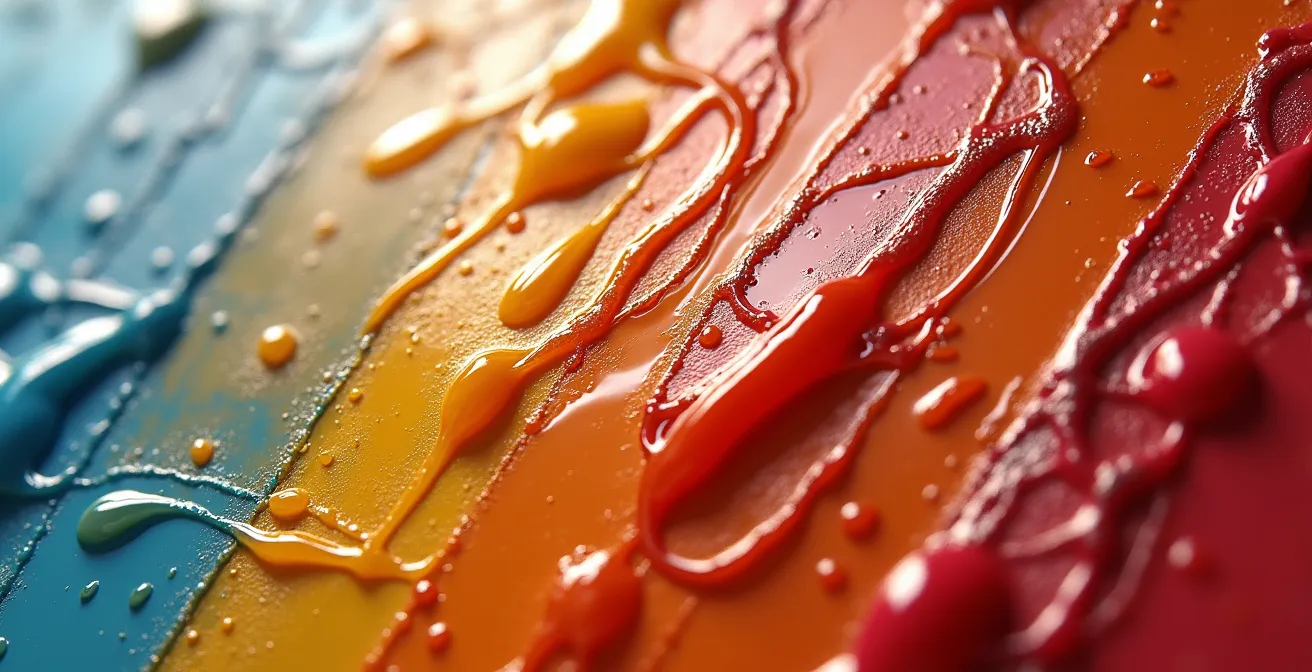
This new medium offers unparalleled opportunities for blending and creating subtle gradations, but it requires adherence to a fundamental principle: the “fat over lean” rule. This means each subsequent layer of paint should have a higher oil content than the one beneath it to prevent cracking. Furthermore, oils experience minimal color shift as they dry, unlike acrylics which tend to darken. This WYSIWYG (What You See Is What You Get) quality allows for more precise color matching, but only if layers are allowed to become touch-dry before being worked over. Glazing—applying thin, transparent layers of color—is a classic oil technique that can create incredible luminosity without overworking the paint, as demonstrated in the image below.
Understanding these differences is crucial for harnessing the full potential of oils. The transition requires a mental shift towards a more patient, deliberate process, where time becomes your greatest ally in building rich, clear, and vibrant layers. The table below outlines the key differences that impact color clarity when moving from acrylics to oils.
This comparative analysis highlights the technical shifts required to maintain color clarity. As the data from Jackson’s Art Blog suggests in their breakdown of painting practices, mastering the medium is the first step toward a professional finish.
| Property | Acrylics | Oils | Impact on Color Mixing |
|---|---|---|---|
| Drying Time | 20-30 minutes | 1-3 days (thin layers) | Oils allow more blending time but risk overworking |
| Color Shift | Darkens when dry | Minimal shift | Oils maintain true color, easier to predict final result |
| Layering Method | Fast layering possible | Fat over lean rule | Oils require patience between layers to avoid mud |
| Medium Options | Limited (water, medium) | Extensive (turps, oils, alkyds) | More control with oils but higher learning curve |
Linen vs. Cotton Canvas: Which Is Worth the Investment for Archival Quality?
Your choice of canvas is far more than a simple surface; it is a foundational statement about your commitment to your craft. While cotton duck canvas is an affordable and popular choice for students and studies, professional artists aiming for gallery representation must consider the long-term implications of their materials. This is where archival integrity becomes a crucial component of your artistic brand. Investing in high-quality Belgian linen is a clear signal to galleries and collectors that you are serious about the longevity and value of your work. The higher price point is not an expense, but an investment in collector confidence.
Linen fibers are significantly longer and stronger than cotton, making the resulting canvas less susceptible to expanding, contracting, or slackening due to changes in humidity. This inherent stability is critical for ensuring the paint film remains intact for generations. Furthermore, the unique, irregular texture of linen offers a distinct “bite” that many artists find adds a subtle but tangible dimensionality to their brushwork. This surface interaction can become an integral part of your signature style, a textural nuance that cannot be replicated on a uniform cotton surface. Ultimately, the choice to use linen is a declaration that your work is built to last, a message that resonates deeply with serious investors in art.
Case Study: The Material as a Message
Professional oil painter Teresa Bernard exemplifies this principle. She attributes a portion of her success and signature style to her unwavering use of archival-quality materials. In her experience, investing in linen canvas for major works directly supports higher price points, as collectors recognize and value the commitment to longevity. This strategic choice is not just about quality but about perception; it helps frame her work as a lasting asset. As she notes, this practice signals a level of professionalism that provides collectors with the confidence they need to invest in an artist’s career.
This perception translates into tangible results. According to observations from gallery owners, a commitment to archival materials significantly impacts an artwork’s market value, as artists using archival linen report 40% higher average selling prices compared to those working on cotton canvas. This statistic underscores that the canvas is not just a cost, but a key factor in the valuation equation.
The Ventilation Error That Risks the Health of Oil Painters
The romantic image of the artist’s studio—filled with the scent of turpentine and oil paints—masks a serious occupational hazard. That characteristic “new car smell” of many art supplies comes from Volatile Organic Compounds (VOCs), chemicals that can cause a range of health issues from headaches and dizziness to long-term respiratory problems. The single most common and dangerous error oil painters make is working in a poorly ventilated space. Simply opening one window is often not enough to create the cross-ventilation needed to effectively remove these harmful fumes from your breathing zone.
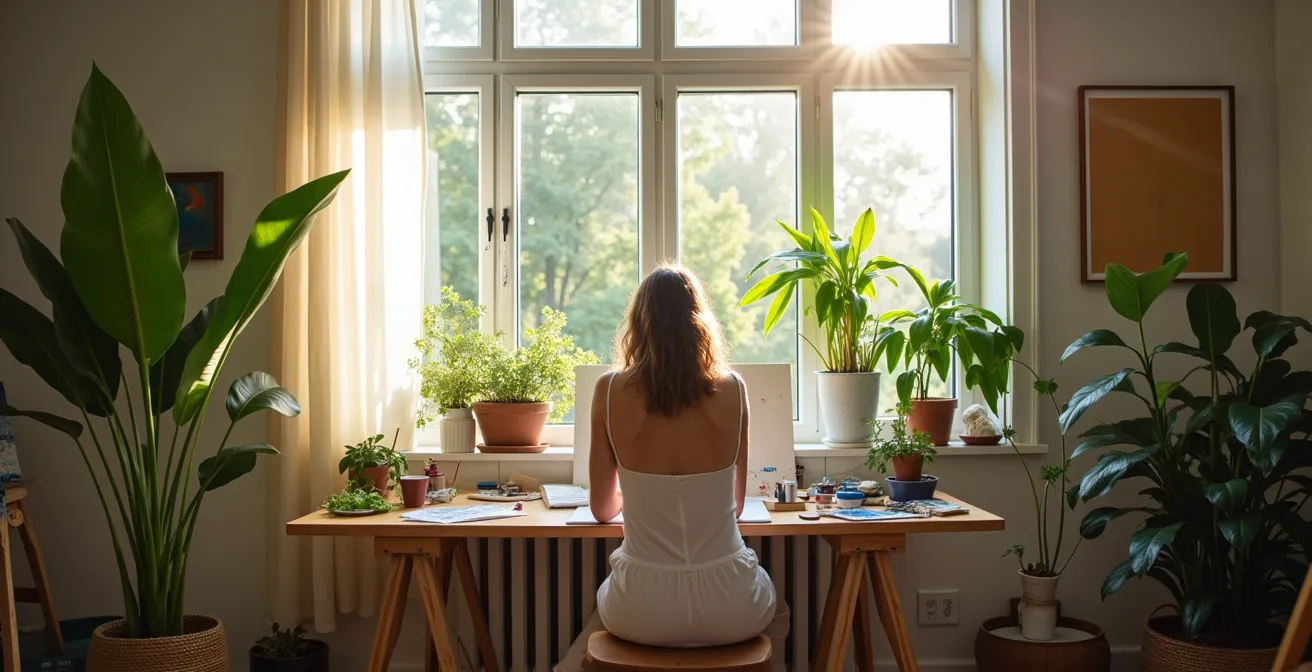
Ensuring a safe studio environment is a non-negotiable aspect of a sustainable artistic practice. Proper ventilation is not a luxury; it is a necessity. The goal is to create a consistent flow of fresh air that pulls contaminated air away from you and exhausts it outside. This can be achieved through various means, from a simple setup with opposing windows and a box fan to a professional-grade fume extraction system. The ideal setup, as shown below, combines natural light with an active air exchange system, creating a space that is both inspiring and healthy.
Regardless of your budget, there are effective solutions to protect your health. For artists working in small or shared spaces, even small adjustments can make a significant difference. Positioning your easel between an open window and a door, for example, can help direct airflow. An alternative and increasingly popular approach is to switch to solvent-free oil painting. Using mediums like walnut or safflower oil not only eliminates the most significant source of VOCs but can also become a key selling point for health-conscious collectors, turning a safety practice into a marketing asset.
Ultimately, protecting your health is essential for a long and productive career. There are scalable solutions for every budget to ensure your creative space doesn’t compromise your well-being.
Your Action Plan: Tiered Ventilation Solutions
- Budget Level ($0-50): Create cross-ventilation with two opposing windows. Position your easel between them to ensure fumes are drawn away from you and work during times of day with optimal natural air flow.
- Mid-Level ($50-200): Augment cross-ventilation by placing a box fan in one window, facing outward to act as an exhaust. Consider adding a HEPA air purifier with a carbon filter to capture VOCs.
- Professional Level ($200-500): Install a dedicated exhaust fan with ducting that vents directly outside. This creates negative pressure, actively pulling contaminated air out of the workspace.
- Gallery-Standard ($500+): Invest in a professional fume extraction system with an adjustable arm that can be positioned directly over your palette and canvas, capturing fumes at the source.
- Alternative Solution: Transition to solvent-free painting. Market your work as being created with non-toxic materials like walnut oil, safflower oil, or alkyd mediums to appeal to eco-conscious buyers.
When to Apply to Art Fairs to Maximize Acceptance Chances?
Breaking into the art fair circuit is a significant milestone for an emerging artist, but success often depends on a factor that is overlooked: timing. Submitting your application at the last minute is a common mistake that signals a lack of professional planning to jurors. Art fair selection committees are not just evaluating your work; they are assessing your professionalism. Applying well in advance demonstrates foresight, commitment, and an understanding of the industry’s operational rhythm.
The ideal application window varies depending on the tier and type of fair. For major international fairs like Frieze or Art Basel, the process begins as early as a year in advance. This long lead time is necessary for jurors to curate a cohesive and high-caliber exhibition. Applying early gives them more time to consider how your work fits within their vision and shows that you are a serious contender who plans their career trajectory. For regional or emerging artist fairs, the timeline might be shorter, but the principle remains the same: early applications stand out in a crowded field.
This strategic approach to timing allows you to align your portfolio with a fair’s specific theme or focus, further increasing your chances of acceptance. It gives you the space to create new work, refine your artist statement, and present a polished, professional package. The following table, based on insights from art advisors like Renee Phillips on her blog about artistic careers, provides a strategic timeline for different types of fairs.
| Fair Type | Apply When | Strategic Advantage | Success Rate |
|---|---|---|---|
| Regional Feeder Fairs | Q3 for Q1 fair | Jurors planning ahead, less competition | 35-45% |
| Mid-Tier Fairs | 6 months prior | Time to align work with fair theme | 20-30% |
| Top-Tier International | 9-12 months prior | Shows serious planning and commitment | 5-15% |
| Emerging Artist Fairs | Q4 for following year | Early bird advantages, portfolio time | 40-50% |
Treating applications as a strategic part of your annual calendar, rather than a last-minute scramble, fundamentally shifts how you are perceived by the industry’s gatekeepers.
Adopting Blue-Chip Habits to Build Collector Confidence
When collectors consider investing in art, they weigh risk versus reward. While blue-chip artists like Gerhard Richter or Yayoi Kusama represent stable, low-risk investments, emerging artists offer the potential for higher returns but also greater uncertainty. As an emerging artist, your central challenge is to mitigate that perceived risk. You can achieve this by adopting the professional habits of blue-chip artists long before you reach their market status. This is about building collector confidence through transparency, consistency, and professionalism.
This means going beyond simply creating the work. It involves meticulously documenting every piece, from the materials used to a photographic record of your process. It means establishing a consistent and transparent pricing formula based on objective factors like size and complexity, and sticking to it across all platforms. Undercutting your own prices in a private sale, for example, can instantly erode a collector’s trust and devalue your entire body of work. Providing certificates of authenticity and maintaining detailed provenance records are not administrative burdens; they are essential tools for building a professional artistic brand.
Case Study: Professional Practices as a Brand Differentiator
The career of contemporary artist Teresa Bernard serves as a powerful example. From early on, she implemented “blue-chip” practices by maintaining a professional inventory, providing certificates of authenticity with every sale, and keeping her pricing consistent. Collectors cited in discussions about her work have reported that these professional habits provided the ‘safety’ and confidence they needed to invest in her as an emerging talent. This approach allowed her to command higher prices than her peers and build a loyal collector base that trusted her and her work’s long-term value.
By operating with this level of professionalism, you are not just selling a painting; you are offering a secure investment and a partnership in your artistic journey. These habits transform you from a risky prospect into a credible, investable artist.
Checklist: Building Blue-Chip Credibility as an Emerging Artist
- Document Everything: Keep meticulous records of your materials, techniques, and creation dates. Professionally photograph each finished piece and even your work-in-progress to build a rich provenance.
- Establish Consistent Pricing: Create a transparent pricing formula (e.g., based on square inch or linear inch) and apply it consistently across your website, galleries, and studio sales. Never devalue your work by offering inconsistent discounts.
- Build Institutional Recognition: Don’t just focus on sales. Apply to juried group shows at local museums, seek reviews from respected art critics, and pursue artist residencies to build a strong, credible CV.
- Create Scarcity Strategically: Manage your output. Consider releasing work in focused series, creating limited editions of prints, or even establishing a waiting list for new pieces to build demand and perceived value.
- Develop Signature Elements: Consciously refine the recognizable markers of your style—a specific brushstroke, a recurring motif, a unique color combination—so collectors can identify your work from across a room.
The “Green Studio”: Turning Health and Safety into a Marketable Narrative
We’ve discussed the physical risks of poor ventilation, but the presence of VOCs in your studio has implications beyond your personal health. That “new car smell” of fresh paint and solvents is a sign of off-gassing chemicals, a fact that is becoming increasingly concerning for artists and collectors alike. Rigorous health studies of professional artists reveal that artists working without proper ventilation face 3x higher risk of developing respiratory issues after just a decade of practice. This alarming statistic highlights the urgent need for safer studio practices.
However, this challenge also presents a unique branding opportunity. By consciously creating a “green” or non-toxic studio, you can craft a powerful and compelling narrative cohesion around your work. This involves more than just opening a window; it’s about actively choosing solvent-free mediums, natural pigments, and sustainable substrates like bamboo panels or reclaimed wood. This commitment to health and sustainability can become a core part of your artistic identity and a significant differentiator in a crowded market.
Marketing your work as “sustainably created” or “non-toxic” appeals directly to a growing segment of eco-conscious and health-conscious collectors. These buyers are not just acquiring an object; they are investing in art that aligns with their personal values. This narrative adds a layer of meaning to your work that transcends pure aesthetics, providing a compelling story that galleries can use to engage potential buyers.
Case Study: The Green Studio Movement as an Artistic Brand
A growing number of successful artists are making their non-toxic and sustainable studio practices a central pillar of their brand. They prominently feature this commitment in artist statements, on their websites, and in marketing materials. These artists report that this narrative directly attracts a niche but dedicated collector base. One artist noted that highlighting their use of water-based oils and natural pigments led to a significant increase in sales to health-conscious individuals and institutions with sustainability mandates, who are often willing to pay a premium for work that meets their ethical criteria.
By transforming your studio from a place of potential hazard into a sanctuary of safe and sustainable creation, you not only protect your own health but also build a powerful, authentic, and highly marketable artistic brand.
Key takeaways
- Your signature style is not found, but built through strategic decisions about color, materials, and narrative.
- Professionalism is a key part of your brand. Archival materials and meticulous documentation build collector confidence and increase value.
- A safe and healthy studio practice is not only essential for your longevity as an artist but can also become a powerful, marketable story.
Positioning Your Work to Attract Collectors with Budgets Under $10,000
While the art world headlines are dominated by multi-million dollar auction sales, the lifeblood of the market is the passionate collector with a more modest budget. For an emerging artist, the sub-$10,000 price point is the most critical segment to capture. This is where new collectors take their first steps and where long-term relationships are born. Attracting this audience requires a strategic approach to pricing and accessibility, turning your studio practice into a welcoming entry point for aspiring art lovers.
The key is to create multiple entry points into your work. Not everyone can immediately commit to a large, expensive statement piece. By offering a range of sizes and price points—from smaller studies and works on paper ($500-$1,500) to medium-sized canvases ($2,000-$5,000) and finally, your major works—you allow collectors to engage with your brand at a level they are comfortable with. Offering payment plans can further lower the barrier to entry, making a significant purchase feel more manageable. These strategies are not about devaluing your work; they are about building a ladder for collectors to climb as their confidence and budget grow.
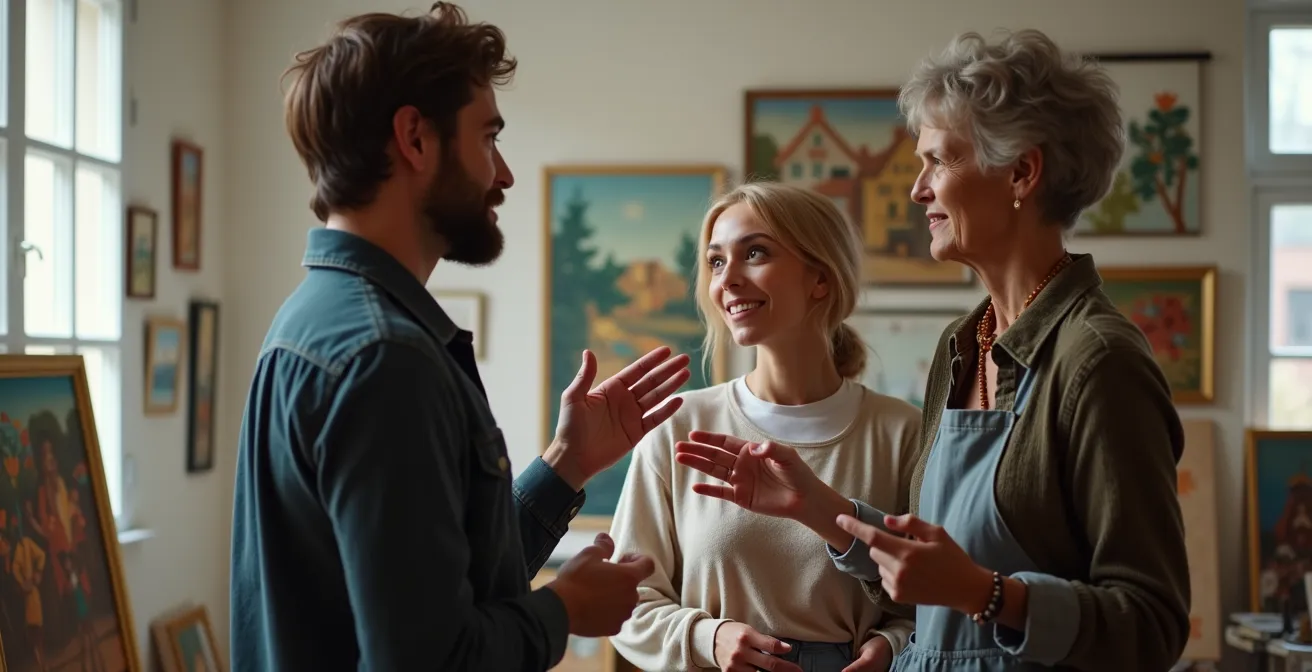
Equally important is the experience you provide. Value is not just in the object itself, but in the connection to the artist. Inviting a potential buyer for a studio visit, as depicted below, can transform a transaction into a memorable experience. Offering value-adds like this, or providing detailed process explanations and certificates of authenticity, builds trust and a sense of community around your work. You are inviting them to be part of your story.
By making your work accessible and building genuine relationships, you cultivate a loyal following that will support you throughout your career. A collector who buys a small study today could be the one acquiring your most ambitious piece a decade from now. Here are some concrete ways to make your work attractive to this vital collector base:
- Offer multiple price tiers: Create a range of works, including smaller studies, prints, and medium-sized pieces to provide accessible entry points.
- Provide flexible payment options: Offering 3-6 month interest-free payment plans can make a $5,000 painting a feasible acquisition for many more people.
- Include value-adds with purchase: A personal note, an invitation to your next opening, or a book that inspired the work can create a lasting connection.
- Build trust through transparency: Always provide professional photography, clear condition reports, and a certificate of authenticity to build collector confidence.
Ultimately, your goal is to make the process of acquiring your art as thoughtful and compelling as the art itself.
Start today by implementing these strategies to transform your artistic practice into a professional, investable, and enduring career.