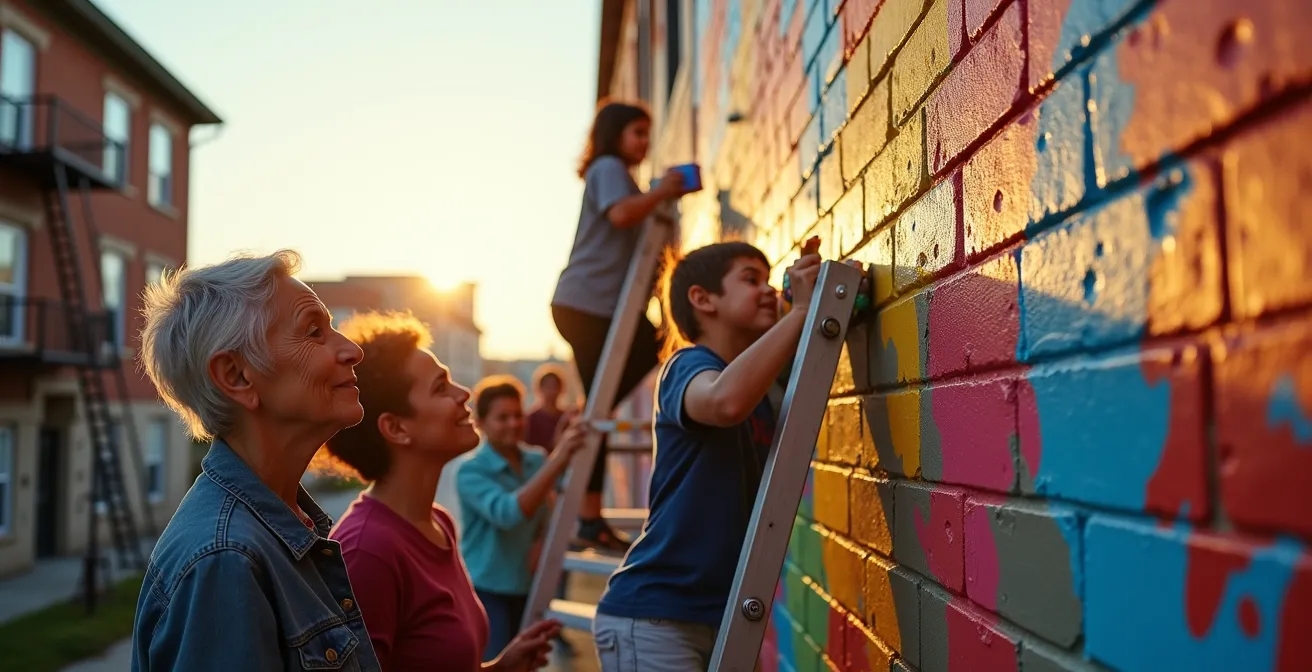
True social transformation through art isn’t about murals or galleries; it’s about strategically shifting power and building permanent community assets.
- Unchecked “creative” investment often accelerates displacement and gentrification, rather than fostering community empowerment.
- Success must be measured by tangible social outcomes and return on investment (SROI), moving far beyond simple attendance metrics.
Recommendation: Build a strategic portfolio of art initiatives that prioritizes ethical co-creation, shared ownership of narratives, and long-term community wealth.
For decades, community leaders and social workers have turned to art as a tool for change in at-risk neighborhoods. The common wisdom suggests that murals curb vandalism, galleries bring life to empty storefronts, and public art projects foster a sense of shared identity. We are told that art beautifies, unifies, and gives a voice to the marginalized. While these outcomes are possible, they are far from guaranteed. Too often, these well-intentioned efforts become the unintentional vanguard of gentrification, creating “creative” neighborhoods that eventually displace the very residents they aimed to serve.
The core problem isn’t the art itself, but the strategy—or lack thereof—behind it. Focusing solely on the aesthetic output, the artistic artifact, misses the point entirely. It treats communities as passive canvases rather than active creators and owners of their own transformation. But what if the true measure of success wasn’t the beauty of the mural, but the number of local jobs created in the process? What if the key wasn’t simply giving people a voice, but ensuring they own the microphone, the recording studio, and the distribution rights?
This guide reframes the conversation. We will move beyond the platitudes to explore a more rigorous, strategic framework. The fundamental shift is from viewing art as a decorative act to seeing it as a powerful form of community investment. This article will dissect why some art initiatives lead to displacement, how to measure what truly matters, the ethics of storytelling, and ultimately, how to build a portfolio of cultural programs that generates lasting social and economic equity. It’s time to stop just making art in neighborhoods and start building community wealth through art.
To navigate this complex but crucial topic, this article breaks down the core strategic pillars. The following sections will guide you from understanding the risks to implementing effective, ethical, and measurable art-based social change programs.
Summary: A Strategic Guide to Art, Community, and Social Change
- Why Art Galleries Are Often the Precursors to Gentrification?
- How to Measure the Success of Community Art Projects Beyond Attendance?
- Government Initiatives or Grassroots Movements: Which Changes Society Faster?
- The Ethics Trap: Using Local Struggles for Artistic Gain
- When to Introduce Art Programs During Urban Renewal Cycles?
- The Outreach Mistake That Alienates Local Communities from Museums
- Why Your Investment Choice Has More Impact Than Your Consumption?
- How to Build a Portfolio That Reflects Your Personal Values?
Why Art Galleries Are Often the Precursors to Gentrification?
The image of the “starving artist” revitalizing a forgotten urban block is a powerful cultural myth. However, the reality is often more complex and far less romantic. When art galleries and commercial arts industries move into low-income neighborhoods, they frequently act as an economic signal. This influx signals to real estate developers and higher-income residents that the area is becoming “desirable,” triggering a cycle of rising rents and property values. While this may seem like positive growth, it often leads to the displacement of long-term, lower-income residents. In fact, a study by the National Community Reinvestment Coalition found there were 261,000 fewer Black residents in gentrifying neighborhoods since the 1980s, highlighting the demographic shifts that often follow cultural investment.
It’s crucial to distinguish between different types of art. Research reveals a stark difference in impact: commercial arts industries show the strongest correlation with gentrification in rapidly changing areas. These ventures are often externally funded and focused on profit. In contrast, fine arts and non-profit community arts are more associated with neighborhood stability, suggesting that the motive and structure behind the art are key. The “Instagram effect,” as seen in places like Denver’s RiNo Art District, demonstrates this perfectly. Government-sanctioned street art festivals can turn a neighborhood into a trendy photo-op, making the territory feel more “familiar and open to socioeconomic change” for outsiders, which accelerates the gentrification process.
The danger lies in confusing aesthetic improvement with social progress. A fresh coat of paint on a building doesn’t help a family afford a 50% rent hike. For community leaders, this means being critically aware of who the art is for and who benefits financially. An art initiative that doesn’t include mechanisms for local ownership, rent control, or job creation for residents can inadvertently become a tool of displacement, paving the way for a neighborhood that is “revitalized” but no longer recognizable to the people who once called it home.
How to Measure the Success of Community Art Projects Beyond Attendance?
For too long, the success of community art projects has been judged by superficial metrics: How many people showed up? How much press did it get? These numbers say little about genuine social transformation. Measuring real impact requires a shift from counting bodies to quantifying change in people’s lives. The most effective framework for this is Social Return on Investment (SROI). SROI is a methodology for translating intangible social outcomes—like increased confidence, improved mental health, or stronger social connections—into a monetary value.
Instead of just seeing a mural, SROI asks what skills residents learned while painting it. Instead of just tracking ticket sales, it measures the reduction in healthcare costs from an art therapy program. This provides a powerful language for communicating value to funders and policymakers. For example, a study of the Breathing Lights public art project revealed a remarkable $1.84 in social value for every $1 invested. This kind of data proves that art is not a luxury but a vital and efficient tool for community development.
Implementing an SROI framework forces a project to be intentional from the start. It requires identifying the specific changes the community wants to see and then mapping how the art activities will lead to those outcomes. This process is inherently participatory, involving community members as experts in their own experience. It moves the evaluation from an external audit to an internal process of learning and accountability, ensuring the project remains aligned with the community’s true needs and aspirations.
Action Plan: Implementing a Social Return on Investment (SROI) Framework
- Stakeholder Mapping: Involve all parties—beneficiaries, community members, staff, and funders—to define what social, environmental, and economic outcomes are most valued.
- Theory of Change: Create a clear impact map showing the logical chain from your inputs (funding, time) and activities (workshops, exhibitions) to outputs and the final community outcomes.
- Evidence Outcomes: Collect both quantitative data (surveys, skill assessments) and qualitative evidence (stories, testimonials) that demonstrate change has occurred.
- Financial Proxies: Establish credible financial equivalents for your outcomes. For example, a new job skill can be valued by the increase in potential earnings.
- Calculate SROI: Calculate the net present value of the impact and compare it to the value of the investment, accounting for factors like what would have happened anyway (deadweight).
Government Initiatives or Grassroots Movements: Which Changes Society Faster?
The debate over top-down versus bottom-up change is central to social transformation. Government initiatives, with their access to significant funding and legislative power, can implement change at a massive scale. They can fund arts districts, rewrite zoning laws, and establish city-wide cultural programs. However, this scale often comes at a cost. Government-led projects can lack the nuance and deep community trust necessary for lasting impact. They are often designed by officials far removed from the neighborhood’s daily life, leading to programs that feel imposed rather than embraced.
In contrast, grassroots movements emerge organically from within the community. They are born from a shared need and a collective desire for change. These movements create deep, sustainable, but often localized transformation. As one academic analysis notes, they possess a community trust that top-down initiatives struggle to replicate. A community garden built by residents on a vacant lot, a youth-led open mic night, or a cooperative screen-printing shop—these projects are powerful because they are owned, both literally and figuratively, by the people they serve. They build social fabric and local leadership in a way that a one-off, city-sponsored festival rarely can.
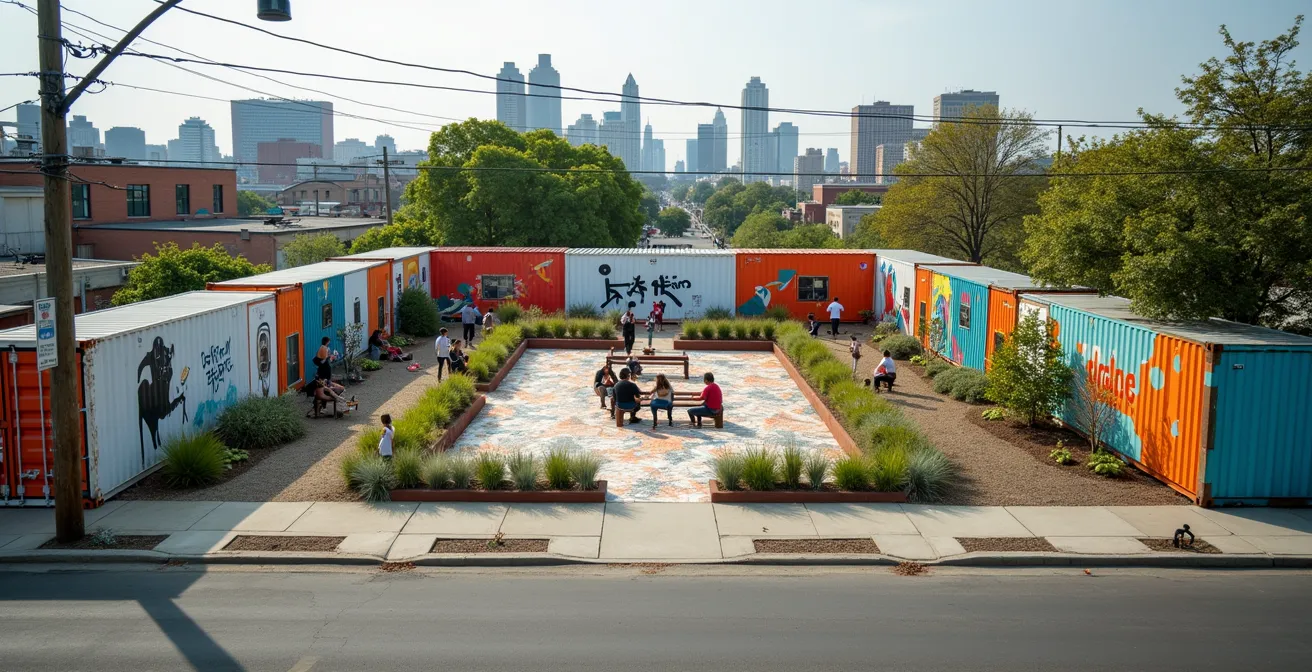
The speed of change is deceptive. A government program might install a dozen sculptures in a month, creating the illusion of rapid progress. A grassroots movement might take a year to secure a space and build a program. However, the grassroots project builds permanent community assets—skills, relationships, and a sense of agency—while the sculptures may remain disconnected artifacts. The ideal model, therefore, is not a choice between the two but a synergy. The most profound and lasting change occurs when government resources are used to empower and scale successful grassroots initiatives, providing the fuel for community-driven engines of change without seizing the steering wheel.
The Ethics Trap: Using Local Struggles for Artistic Gain
Art has a unique power to bear witness to struggle and injustice. However, a fine line exists between amplification and exploitation. The “ethics trap” occurs when artists, curators, or institutions use a community’s pain and history as raw material for their own creative or career advancement, without meaningful benefit to the community itself. This is extractive artistry: taking stories, images, and experiences without permission, context, or reciprocity. It reinforces power imbalances, positioning the artist as the heroic interpreter and the community as a passive, tragic subject.
To avoid this trap, the guiding principle must be ethical co-creation. This model shifts the dynamic from an artist working *about* a community to an artist working *with* a community. It means shared ownership of the narrative, the process, and even the final artwork. It requires building long-term relationships based on trust and mutual respect, not short-term engagements for a single project. The aesthetic must emerge from the community’s identity and values, not be imposed by an outsider’s vision.
The following table outlines the fundamental differences between an extractive approach and a community-centered one, providing a clear checklist for evaluating the ethical foundation of any social art project.
| Extractive Artistry | Community-Centered Practice |
|---|---|
| Outside artists mine community pain for career benefit | Community members are co-creators and agents of their stories |
| One-way value extraction | Reciprocal value creation and benefit-sharing |
| Artist holds narrative power | Shared ownership of narrative and artwork |
| Short-term engagement | Long-term commitment and relationship building |
| External aesthetic imposed | Aesthetic emerges from community identity |
Ultimately, ethical art is not just about its social theme; it’s about its social practice. As artist and activist Daniel Arzola states, “My work changed my reality. And not only saved my life, but also help me to save the life of my family.” This powerful sentiment underscores the true potential of art: not just to represent change, but to be a direct vehicle for it, creating tangible opportunities and empowering individuals to become authors of their own destiny.
When to Introduce Art Programs During Urban Renewal Cycles?
Timing is everything in urban development. Introducing an art program into a neighborhood is not a neutral act; its impact depends heavily on where the community is in its renewal cycle. If introduced too late, when gentrification is already underway, art programs can inadvertently act as a “seal of approval” for developers, signaling that the neighborhood is now safe and trendy for high-income investors. This often serves to accelerate displacement rather than mitigate it.
The most strategic time to introduce art and restoration initiatives is at the very beginning of a renewal cycle, particularly when led by existing residents. This is a “ground-up” approach to transformation. The history of Lafayette Park in St. Louis provides a compelling model. After a cyclone left the area in disrepair in 1896, it fell into decline. Decades later, in the 1970s, a grassroots rehabilitation process began when homeowners—many of them long-term residents—started purchasing and restoring properties themselves. This early, resident-led investment in the neighborhood’s aesthetic and historical character helped shape its transformation from within, ensuring that the benefits of renewal were shared more equitably.
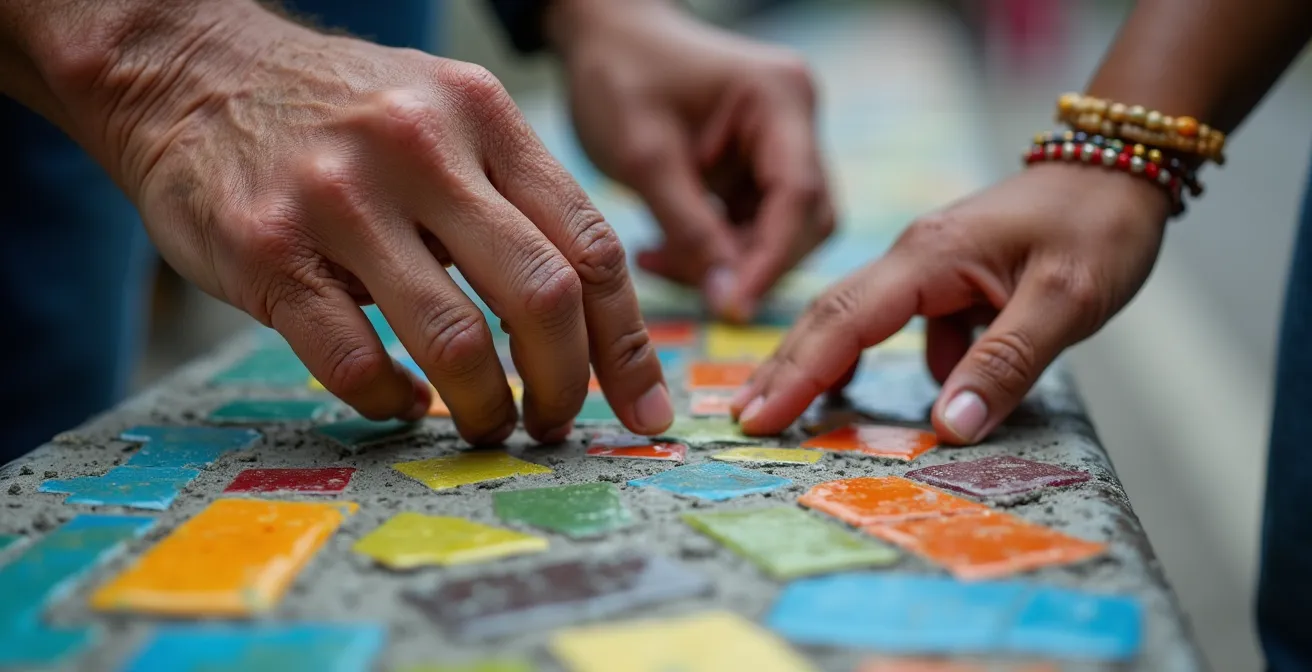
Art can also serve as a crucial bridge during periods of disruption. When a neighborhood is undergoing major construction, temporary art installations on construction barriers, community memory walls, or pop-up performances can help maintain a sense of place and social cohesion. These projects give residents a way to creatively process the changes happening around them and assert their continued presence. They transform sites of disruption into sites of expression. For social strategists, the key is to use art as a proactive tool to shape the narrative of renewal from the outset, not as a reactive decoration on a process already controlled by outside forces.
The Outreach Mistake That Alienates Local Communities from Museums
Museums and large cultural institutions often struggle to connect with the diverse communities surrounding them. Their typical outreach strategy revolves around access: offering free ticket days, school tours, or community passes. While well-intentioned, this approach fundamentally misunderstands the barrier. The key mistake, as one analysis of museum engagement points out, is not the lack of free tickets, but museums asking communities to “come to us” instead of offering their resources to solve community-identified problems.
This “come to us” model reinforces a power dynamic where the institution is the holder of culture and the community is the passive recipient. It presumes that the community’s primary need is to see the museum’s collection. In reality, the community may have more pressing needs where the museum’s unique resources could be invaluable. For instance, a neighborhood group may need a meeting space, expertise in preserving historical photographs, or help designing a local walking tour. A truly engaged museum would see these needs as opportunities for partnership, not distractions from their core mission.
To break this cycle of alienation, institutions must practice institutional humility. This means shifting from a transactional model (trading tickets for attendance) to a relational one (building long-term partnerships). It involves actively inviting community members to critique and co-curate museum narratives, dedicating significant space to local culture, and positioning residents as the true experts of their own stories. Effective engagement is not about getting more people through the door; it’s about putting the museum’s assets—its space, its staff’s skills, and its platform—in service of the community’s goals. Key best practices include:
- Shift from transactional to relational approaches by building long-term relationships rather than focusing on one-time visits.
- Practice institutional humility by inviting community members to challenge and critique museum narratives and authority.
- Co-curate with residents, dedicating significant exhibition space to reflect local culture, history, and current concerns.
- Bring museum expertise into the community by offering conservation skills, archival knowledge, or curatorial support for local projects.
- Share authority and decision-making power by positioning community members as experts in their own experiences and stories.
Why Your Investment Choice Has More Impact Than Your Consumption?
In the effort to support local communities, many people focus on their consumption habits—buying from local artists or attending neighborhood events. While these actions are valuable, they represent a drop in the bucket compared to the impact of investment choices. Where capital flows, development follows. The decision of a foundation to fund a specific type of art program, or of a city to invest in a “cultural district,” has a far greater and more lasting impact than the sum of individual ticket sales. Investment directs the tide of change; consumption merely rides its waves.
Research across four major US cities demonstrated that the highest arts growth rates were in already gentrified neighborhoods. This shows that capital tends to follow capital, amplifying existing trends rather than creating new opportunities in underserved areas. This is why a strategic choice of investment is so critical. Investing in a commercial art gallery in a rapidly gentrifying area is fundamentally different from investing in a community-owned art space that provides job training for local youth. The first is an investment in real estate appreciation; the second is an investment in human potential and community wealth.
Consider the difference between funding a one-off mural and investing in a community screen-printing workshop. The mural is a form of consumption—a beautiful artifact that is eventually consumed by the public gaze. The workshop, as demonstrated by NeighborWorks America’s creative community development work, is an investment in long-term community assets. It creates a space, imparts transferable skills, generates potential for local entrepreneurship, and builds a sustainable hub for future creative expression. It uses the power of art to catalyze social and economic transformation from within. For leaders and funders, the question must always be: “Is this expenditure creating a temporary product, or is it building a permanent capacity?”
Key Takeaways
- Art is a tool for social change, but it can also accelerate gentrification if not managed with a focus on community equity.
- Measuring success requires moving beyond attendance to metrics like Social Return on Investment (SROI) that quantify tangible community benefits.
- Ethical practice demands co-creation and shared ownership, treating communities as partners, not subjects for “extractive artistry.”
How to Build a Portfolio That Reflects Your Personal Values?
Just as a financial investor diversifies to manage risk and maximize returns, a social impact strategist must build a diverse portfolio of art initiatives to achieve sustainable community transformation. A “one-size-fits-all” approach to funding or programming is doomed to fail. A portfolio approach allows you to balance different types of interventions to meet a range of community needs, from immediate relief to long-term capacity building. It acknowledges that some projects yield predictable, steady returns while others are high-risk, high-reward ventures into radical new forms of social expression.
Building a values-based portfolio means aligning your investments with your core mission of social equity. This requires a clear-eyed assessment of the risk and potential social return of different program types. As SROI methodology experts have shown, translating intangible outcomes into financial equivalents can reveal incredible value, often showing that for every dollar invested, multiple dollars of social good are created. A well-structured portfolio might balance stable, low-risk funding for youth art education with riskier venture funding for experimental projects led by marginalized artists.
The matrix below offers a framework for thinking about this diversification. It categorizes different types of art funding based on their risk profile and the nature of their social return. Using such a tool helps leaders make conscious, strategic decisions rather than simply reacting to the most visible or appealing proposal. It ensures that resources are allocated to build a resilient ecosystem of creativity and empowerment, capable of weathering challenges and multiplying impact over the long term.
| Investment Type | Risk Level | Social Return | Example Programs |
|---|---|---|---|
| Venture Funding | High | Transformative but uncertain | Radical political art, experimental community projects |
| Stable Education Funding | Low | Consistent, measurable | Youth art programs, artist mentorship |
| Infrastructure Funding | Medium | Long-term multiplier effect | Community art centers, cooperative galleries |
| Emergency Response | Variable | Immediate relief | Crisis response art therapy, disaster recovery murals |
Ultimately, transforming communities through art is a deliberate and strategic act of social design. It requires moving past the romantic notion of art as a magical cure-all and embracing the rigorous work of building equitable systems. By measuring what matters, investing with intention, and centering community ownership, you can ensure that your initiatives build lasting assets, not just fleeting artifacts. Begin today by evaluating your current programs against these principles to forge a path toward genuine, sustainable social change.