Science & Nature
The intersection of science and nature represents one of humanity’s most profound ongoing conversations. From the quantum realm governing subatomic particles to the vast ecosystems that sustain life on Earth, our understanding of natural processes shapes everything from medical breakthroughs to environmental policy. Yet for many, these fields remain shrouded in complexity, creating a disconnect between groundbreaking discoveries and public comprehension.
This comprehensive exploration bridges that gap by introducing the fundamental concepts that define modern scientific inquiry into the natural world. Whether you’re curious about how quantum computing might transform technology, why biodiversity conservation matters for economic stability, or how scientists are harnessing molecular biology to extend human longevity, this resource provides the foundational knowledge you need. Each section connects theoretical understanding with practical applications, demonstrating why these topics aren’t just academic exercises but crucial elements shaping our collective future.
Conservation Biology and Biodiversity Protection
The preservation of natural ecosystems has evolved from a purely environmental concern to an economic imperative. Regions with high biodiversity consistently demonstrate greater economic resilience, as diverse ecosystems provide essential services like water filtration, pollination, and climate regulation that would cost billions to replicate artificially.
Understanding why certain natural reservoirs face urgent threats requires examining both ecological and economic factors. Wetlands, for instance, act as natural flood barriers and carbon sinks, yet they’re among the most rapidly disappearing ecosystems globally. When these systems collapse, the economic costs of replacing their functions—through infrastructure like levees and water treatment facilities—far exceed the investment required for preservation.
Effective conservation increasingly relies on community-based strategies that recognize local populations as stewards rather than obstacles. Programs that provide economic alternatives to extractive industries, such as ecotourism or sustainable harvesting, have shown remarkable success. The challenge lies in identifying which threatened regions require priority intervention based on factors like biodiversity uniqueness, ecosystem services value, and feasibility of restoration efforts.
Quantum Physics: From Theory to Application
Quantum mechanics often seems confined to abstract theory, but its principles are rapidly transforming practical technology. At its core, quantum physics describes how matter and energy behave at the smallest scales, where particles exhibit properties that seem paradoxical from our everyday experience.
The phenomenon of entanglement—where two particles remain connected regardless of distance—exemplifies this strangeness. Imagine two coins that, when flipped simultaneously on opposite sides of the planet, always land on opposite faces. This isn’t communication; it’s a fundamental connection established when the particles interact. This property forms the foundation of quantum computing, where information can exist in multiple states simultaneously until measured.
Current technological infrastructure faces significant challenges in quantum integration. Quantum computers require near-absolute-zero temperatures and extreme isolation from environmental interference. Yet the potential applications—from breaking encryption to simulating molecular interactions for drug discovery—justify the substantial investment. The key limitation of classical physics is its deterministic nature, whereas quantum possibilities embrace probability, allowing certain calculations to be performed exponentially faster.
Molecular Biology and Personalized Medicine
The molecular revolution in medicine promises treatments tailored to individual genetic profiles rather than one-size-fits-all approaches. Understanding how enzymes regulate metabolic health provides a window into why people respond differently to the same diet or medication—variations in enzyme efficiency alter how nutrients and drugs are processed.
CRISPR technology represents perhaps the most accessible gene-editing tool ever developed. At its simplest, CRISPR works like molecular scissors guided by a GPS system: a guide RNA identifies the target DNA sequence, and the Cas9 enzyme cuts at that precise location. This allows scientists to remove faulty genes, insert therapeutic ones, or modify gene expression. While the technology’s precision has improved dramatically, risks remain, particularly around off-target effects where unintended DNA sections are altered.
The landscape of DNA sequencing methods continues evolving, with newer techniques offering trade-offs between speed, accuracy, and cost. Whole-genome sequencing can now be completed in hours rather than years, yet interpreting that data—understanding which variations matter clinically—remains the bottleneck. Predictions about anti-aging treatments suggest that interventions targeting cellular senescence and metabolic pathways may become viable within decades, though regulatory and ethical frameworks lag behind the science.
Ecological Restoration and Rewilding Strategies
Large-scale environmental recovery isn’t merely about planting trees; it requires strategic thinking about ecosystem dynamics and climatic cycles. The economic benefits of rewilding extend beyond carbon sequestration to include water cycle regulation, soil fertility restoration, and biodiversity recovery that supports industries from agriculture to pharmaceuticals.
Permaculture principles, when applied at macro scales, create self-sustaining systems that minimize external inputs. The choice between active planting and natural regeneration depends on ecosystem condition—degraded landscapes often need initial intervention to overcome barriers like compacted soil or invasive species, while intact systems may recover faster when simply protected from disturbance.
Common pitfalls in restoration projects typically involve monoculture approaches that prioritize rapid biomass accumulation over ecosystem complexity. Planting single-species forests creates vulnerability to pests and provides minimal habitat diversity. Successful projects time interventions with natural cycles—planting before rainy seasons, removing invasives before seed dispersal, and allowing natural succession to guide species composition once initial conditions are established.
Biomimicry: Learning From Nature’s Engineering
Nature has spent billions of years optimizing solutions to engineering challenges that humans are only beginning to address. Translating these biological designs into industrial applications reveals remarkable efficiency gains that conventional engineering might never discover.
Consider termite mound architecture, which maintains stable internal temperatures despite extreme external fluctuations without mechanical systems. The mounds use carefully positioned vents and tunnels to create convection currents that regulate airflow. Buildings designed on these principles have achieved significant cooling cost reductions compared to traditional air conditioning.
Other applications demonstrate similar promise:
- Shark skin-inspired surfaces reduce drag in transportation, with textured patterns that disrupt turbulent flow, improving fuel efficiency in ships and aircraft
- Gecko-inspired adhesives utilize millions of microscopic hairs creating van der Waals forces, enabling reversible attachment without chemical residues
- Beetle-inspired water collection leverages hydrophobic and hydrophilic surface patterns to harvest moisture from fog in arid environments
Current limitations in bio-inspired robotics often involve the gap between biological complexity and mechanical simplicity—replicating a bird’s integrated flight control system remains far more challenging than copying wing shape alone.
Circular Bioeconomy and Waste Transformation
The transformation of biological waste streams into profitable products represents a fundamental shift from linear “take-make-dispose” models to circular systems where outputs become inputs. This transition isn’t idealistic environmentalism; it’s economically rational when resource scarcity and waste disposal costs are factored accurately.
Processing agricultural waste into bioplastics exemplifies this approach. Crop residues like corn stover or wheat chaff, traditionally burned or left to decompose, can be converted into polymers with properties comparable to petroleum-based plastics. The process typically involves breaking down cellulose into sugars, fermenting those sugars to produce organic acids or alcohols, then polymerizing those compounds into plastic precursors.
Selecting appropriate biomass energy sources requires evaluating factors beyond energy content, including collection logistics, processing requirements, and competing uses. Woody waste might be ideal for combined heat and power systems, while wet organic waste suits anaerobic digestion for biogas production. Regulatory frameworks for bio-products vary significantly across jurisdictions, with some regions offering incentives for waste valorization while others impose strict quality standards that increase market entry barriers. Timing market introduction requires balancing technological maturity with consumer acceptance and price competitiveness against conventional alternatives.
Science Communication and Public Engagement
A persistent disconnect exists between scientific consensus and public understanding across numerous fields, from evolution to climate science. This gap isn’t primarily about intelligence but about how scientific information is presented and the competing narratives that fill the void when clear communication fails.
The rise of citizen science initiatives offers a promising bridge, transforming passive information consumers into active data collectors. Projects ranging from bird population monitoring to water quality testing engage thousands of volunteers, simultaneously advancing research and building scientific literacy. Participants gain firsthand experience with the scientific process—observation, measurement, uncertainty—that abstract textbook descriptions never convey.
Common textbook misconceptions perpetuate misunderstanding, particularly around evolution, which is often incorrectly portrayed as a linear progression toward complexity rather than adaptation to environmental pressures. The debate over how to define intelligence in nature highlights how human-centric frameworks can obscure remarkable problem-solving abilities in organisms from cephalopods to slime molds. Optimizing biology curriculum for modern literacy means emphasizing process over memorization, teaching students to evaluate evidence and understand scientific uncertainty rather than treating science as a collection of immutable facts.
Ethics and Integrity in Modern Research
The landscape of scientific research faces challenges that extend beyond technical questions to fundamental issues of methodology, funding, and bias. The reproducibility crisis—where significant percentages of published studies cannot be replicated—stems from multiple factors including publication bias toward positive results, inadequate statistical power, and pressure to produce novel findings quickly.
Securing research grants in competitive environments creates perverse incentives where incremental progress on trending topics receives funding while riskier foundational work goes unsupported. The comparison between public and private research models reveals different strengths: public institutions typically pursue longer-term fundamental questions with freely shared results, while private research often achieves faster application but with proprietary restrictions that limit scientific progress.
Emerging concerns about algorithmic bias in computational science demonstrate how automated systems can perpetuate human prejudices. Machine learning models trained on biased datasets produce biased predictions, whether in medical diagnosis, ecological modeling, or grant evaluation. Optimizing peer review processes to catch these issues requires transparency in data sources, methodological rigor in validation, and diverse reviewer perspectives that can identify assumptions invisible to those within a particular research tradition.
The convergence of these diverse fields—from quantum mechanics to conservation biology, from molecular medicine to biomimicry—illustrates how modern science increasingly operates at disciplinary intersections. Understanding these connections enriches both our comprehension of natural processes and our ability to apply that knowledge responsibly. As you explore specific topics in greater depth, remember that scientific literacy isn’t about memorizing facts but developing the tools to evaluate evidence, recognize uncertainty, and appreciate the profound intricacy of the natural world we’re only beginning to understand.

How Is Contemporary Science Addressing the Ethics of Artificial Intelligence?
The prevailing approach to AI ethics in science often treats symptoms like algorithmic bias and research non-replication as isolated technical bugs. This article argues that they are, in fact, consequences of deep, pre-existing structural flaws in funding models, peer review…
Read more
How Does Improving Human Knowledge of Life on Earth Impact Conservation Policies?
The effectiveness of conservation policy hinges not on the volume of scientific data, but on its successful social translation into compelling public narratives. Cognitive biases like temporal discounting often cause a disconnect between scientific consensus and political action. Effective strategies,…
Read more
How to Transition Supply Chains to Circular Bioeconomies Without Disrupting Output?
Contrary to common belief, transitioning to a circular bioeconomy is not an environmental expense but a strategic re-engineering of your supply chain to unlock profit from waste. The linear ‘take-make-dispose’ model exposes manufacturers to severe price volatility and rising disposal…
Read more
How Can Biomimetic Engineering Solutions Reduce Energy Consumption in Architecture?
True biomimetic innovation is not about copying nature’s forms, but reverse-engineering its fundamental principles of physics and chemistry. Energy reduction breakthroughs come from understanding the “how” behind a biological success, not just the “what”. Translating these principles into industrial applications…
Read more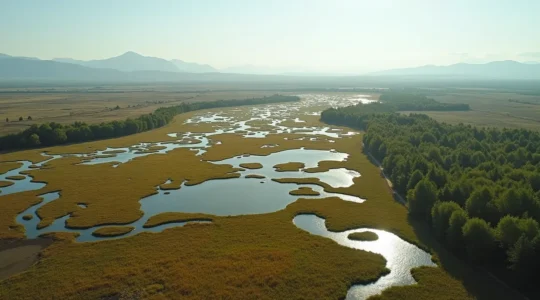
How to Scale Global Ecosystem Restoration Projects for Maximum Carbon Capture?
Scaling global restoration is a complex logistical challenge of ecosystem engineering, not a simple tree-planting exercise. Prioritizing functional biodiversity over monoculture planting delivers higher, more resilient carbon yields and economic co-benefits. Natural regeneration and rewilding frequently outperform active afforestation in…
Read more
How Does Molecular Biology Pave the Way for Personalized Cancer Treatments?
True personalization in cancer therapy is shifting from analyzing a static DNA map to testing dynamic drug responses on live patient cells. Genomic profiling alone provides actionable treatments for only 5-10% of patients, highlighting a significant gap between promise and…
Read more
How Will the Laws of Quantum Physics Revolutionize Data Security Standards?
The quantum revolution in cybersecurity is not just about breaking today’s encryption; it’s a fundamental paradigm shift from protecting stored data to guaranteeing the physical integrity of information itself. Current security models, based on mathematical complexity, will become obsolete against…
Read more
Why Are Biodiversity Hotspots Critical for Climate Resilience in Coastal Regions?
The failure to protect biodiversity hotspots is a direct and quantifiable threat to global economic stability, not a distant environmental concern. Degraded coastal ecosystems represent trillions in lost economic value through diminished storm protection, fisheries collapse, and tourism revenue. Successful…
Read more