Art & Culture
Art and culture shape how we understand ourselves, connect with others, and navigate the world around us. From the painter selecting the perfect canvas in a quiet studio to the museum curator designing an immersive visitor experience, from the sculptor balancing structural integrity with creative vision to the conservator protecting centuries-old masonry, this field encompasses an extraordinary range of practices, skills, and knowledge. Whether you’re an aspiring artist seeking to master your craft, a cultural professional managing events and institutions, or simply someone curious about how art and culture intersect with technology, sustainability, and community development, understanding these interconnected domains opens doors to richer participation in our shared cultural landscape.
This comprehensive resource explores the fundamental pillars of art and culture: the technical and business skills required for visual and three-dimensional art practice, the evolving role of museums and cultural institutions in engaging diverse audiences, the complexities of organizing cultural events sustainably, the transformative potential of digital and immersive technologies, and the urgent challenges of preserving tangible and intangible heritage. Each section connects theory with practice, offering concrete insights that demystify complex topics and empower you to engage more deeply with the creative and cultural world.
Why Art and Culture Matter in Contemporary Society
Culture serves as far more than entertainment or decoration—it functions as a vital economic driver, social connector, and catalyst for urban transformation. Recent studies demonstrate that cultural districts can increase property values by substantial margins while simultaneously fostering community cohesion and reducing social isolation. The social impact of culture extends into education, mental health, and civic engagement, with cultural participation correlating strongly with improved wellbeing outcomes across diverse populations.
Understanding how to measure this impact has become essential for cultural organizations seeking funding and support. Metrics now extend beyond simple attendance figures to encompass community engagement depth, economic multiplier effects, and long-term behavioral changes among participants. For instance, a community mural project might be evaluated not just by how many people viewed it, but by how many residents participated in its creation, whether it sparked ongoing neighborhood beautification efforts, and how it influenced residents’ sense of belonging and pride.
The challenge lies in balancing quantitative data with qualitative stories that capture culture’s transformative but often intangible effects. Engaging underrepresented communities requires moving beyond token inclusion to genuine co-creation, where cultural programming reflects and responds to the actual needs and aspirations of diverse groups rather than assumptions made by institutions.
Creating Visual Art: From Studio Practice to Professional Career
The journey from hobbyist to professional artist demands mastering both technical skills and business acumen. Many talented creators struggle not because they lack artistic ability, but because they haven’t developed the market understanding necessary to price their work appropriately, identify their ideal collectors, or time their exhibition applications strategically.
Mastering Materials and Techniques
The foundation of any visual art practice rests on understanding your materials intimately. Canvas quality dramatically affects longevity and appearance—a loosely woven cotton canvas may cost less initially but can develop sagging and deterioration within years, while a tightly woven linen primed with archival materials can remain stable for centuries. Similarly, transitioning from acrylics to oils isn’t simply about switching paint tubes; it requires understanding fundamentally different drying times, layering techniques, and color mixing behaviors. Acrylics dry through water evaporation in minutes to hours, while oils cure through oxidation over weeks or months, allowing for extended blending and manipulation but demanding patience and planning.
Studio Safety and Professional Practices
Toxic practices in the studio pose serious health risks that many artists underestimate. Solvents like turpentine release volatile organic compounds that can cause neurological damage with prolonged exposure, while certain pigments contain heavy metals. Implementing proper ventilation, using barrier creams, and choosing safer alternatives—such as odorless mineral spirits or water-mixable oils—protects your health without compromising artistic quality. Think of studio safety like ergonomic office setup: the consequences of neglect may not appear immediately, but cumulative damage becomes irreversible.
The Business of Being an Artist
Understanding the psychology of color in sales can significantly impact commercial success. Certain color palettes consistently perform better in specific markets—calming blues and greens dominate corporate and healthcare settings, while bold, saturated colors attract collectors seeking statement pieces for contemporary spaces. Timing exhibition applications requires researching galleries’ programming calendars, understanding their curatorial themes, and submitting proposals during their actual review periods rather than during installation or peak visitor seasons when staff attention is elsewhere.
Mastering Three-Dimensional Art and Sculpture
Working in three dimensions introduces structural and spatial challenges absent in two-dimensional media. Unlike a painting that hangs safely on a wall, a sculpture must negotiate gravity, weight distribution, and environmental forces while maintaining artistic integrity.
Material Selection and Structural Engineering
Choosing between casting and carving fundamentally shapes both process and outcome. Carving is subtractive—you remove material from a larger block, which means mistakes can’t be undone, but the resulting piece often exhibits remarkable solidity and presence. Casting is additive, allowing you to reproduce forms and experiment with materials from bronze to recycled plastics. Recent innovations in recycled plastic use have opened exciting possibilities, though artists must carefully evaluate durability; some recycled polymers degrade rapidly when exposed to UV light, while others demonstrate excellent longevity when properly formulated.
Preventing Structural Failure
Few experiences are more devastating than a structural collapse during installation. Preventing this requires understanding basic physics: a tall, narrow sculpture needs a low center of gravity or secure anchoring; cantilevers demand precise calculations about weight and balance; stacked elements require adequate load-bearing capacity at each connection point. Professional sculptors often create scaled models to test structural soundness before committing to full-scale production, much like architects build models before constructing buildings.
Studio Space Optimization
Three-dimensional work demands significantly more space than painting or drawing, requiring areas for material storage, fabrication, finishing, and viewing from multiple angles. Optimizing studio space for 3D work often means establishing distinct zones—a dusty zone for grinding and sanding, a clean zone for detailed finishing work, and adequate clearance for moving large pieces safely. Vertical storage solutions and modular work surfaces can maximize functionality even in compact studios.
Museums and Cultural Institutions: Experience and Innovation
Museums today face the challenge of remaining relevant and engaging in an era of infinite digital content and competing leisure activities. Transforming the visitor experience requires rethinking every aspect of the museum visit, from the moment someone considers attending to their post-visit memories and connections.
Combating Museum Fatigue
The “Museum Fatigue” phenomenon describes the physical and cognitive exhaustion visitors experience after viewing numerous exhibits. Research indicates that attention and retention drop dramatically after approximately 30-45 minutes of concentrated viewing, regardless of how compelling the content. Museums address this by strategically placing seating, creating varied pacing through exhibition design, and incorporating interactive elements that engage different cognitive modes. Think of exhibition flow like a well-composed meal—it needs variety in texture, intensity, and pacing rather than relentless sameness.
Layout and Interpretation Strategies
Choosing between thematic and chronological layouts profoundly affects how visitors construct meaning. Chronological arrangements help audiences understand development and historical context, while thematic organizations reveal unexpected connections across time periods and cultures. Many institutions now employ hybrid approaches, using chronology as a backbone while creating thematic “moments” that invite deeper exploration.
Integrating augmented reality guides represents a significant innovation, allowing visitors to access layered information without cluttering physical spaces with text panels. When implemented thoughtfully, AR can reveal conservation processes, animate static objects, or present multiple interpretive perspectives. However, technology must enhance rather than replace the fundamental experience of being present with authentic objects.
Security and Educational Programming
Preventing theft and damage requires sophisticated systems that protect collections while maintaining an open, welcoming atmosphere. This balancing act involves environmental monitoring, trained security personnel, and carefully calibrated alarm systems that distinguish between genuine threats and false positives. Scheduling educational programs demands consideration of school calendars, family routines, and adult learners’ availability, with successful institutions offering diversified timing that serves different audience segments.
Planning and Managing Cultural Events at Scale
Large-scale cultural events—from multi-day festivals to international exhibitions—present extraordinary logistical challenges while offering tremendous opportunities for economic and social impact.
Economic Impact and Sustainability
The economic ripple effect of major cultural events extends far beyond ticket sales, encompassing hotel bookings, restaurant spending, transportation, and local retail activity. A well-executed festival might generate several dollars of indirect economic activity for every dollar of direct spending. However, managing these events sustainably requires confronting waste generation, carbon emissions from travel, and community disruption. Progressive event managers now integrate sustainability from initial planning, selecting venues with public transit access, partnering with local food vendors to reduce transportation, and implementing comprehensive waste sorting systems.
Workforce and Technology Management
Managing volunteer workforces presents unique challenges—volunteers provide essential capacity but require clear communication, meaningful roles, and recognition to maintain motivation. Successful volunteer management resembles conducting an orchestra: each person has a specific part to play, everyone needs to understand how their contribution fits into the whole, and coordination prevents chaos.
Comparing ticketing platforms involves evaluating not just transaction fees but also user experience, data ownership, integration capabilities, and customer service quality. A platform that costs slightly more but provides superior analytics and lower abandonment rates often delivers better overall value.
Crowd Control and Safety
Avoiding crowd control disasters requires meticulous planning around capacity limits, emergency egress routes, and real-time monitoring. Recent tragic incidents at cultural events worldwide have highlighted the catastrophic consequences of inadequate crowd management. Effective strategies include timed entry systems that prevent overcrowding, clearly marked and unobstructed exit routes, and trained staff capable of recognizing early warning signs of dangerous crowd dynamics.
The Digital Revolution in Art and Cultural Spaces
Technology hasn’t replaced traditional art forms but has expanded creative possibilities and transformed how audiences engage with cultural content. Merging art and technology creates experiences impossible through either domain alone.
Understanding Immersive Experiences
The appeal of immersion lies in its ability to transport participants from passive observers to active inhabitants of an artwork. Unlike viewing a painting on a wall, entering an immersive installation surrounds you with light, sound, and often interactive elements that respond to your presence and movement. This embodied engagement creates more memorable experiences and stronger emotional connections than traditional viewing modes.
Technical Requirements and Challenges
Selecting the right projectors for immersive installations requires balancing brightness (measured in lumens), resolution, throw distance, and color accuracy. A space with significant ambient light demands projectors with much higher lumen output than a controllable dark environment, while achieving seamless edge-blending across multiple projectors requires precision calibration. Content licensing models add another layer of complexity—original commissions offer creative control but demand significant investment, while licensing existing content provides proven appeal at lower cost but with potential restrictions on timing and modifications.
Preventing technical glitches during public operation demands redundant systems, environmental controls (projectors and media servers are sensitive to temperature and dust), and trained technicians available for rapid response. Sequencing the visitor journey through immersive spaces involves careful consideration of how people enter, move through, and exit the experience, managing flow to prevent crowding while maintaining the intended narrative arc.
Preserving Cultural Heritage for Future Generations
Cultural heritage faces unprecedented threats from climate change, urbanization, armed conflict, and simple neglect. Preservation requires balancing protection with access, historical authenticity with contemporary needs.
Tangible Heritage Conservation
Protecting historical assets against climate and modernization demands sophisticated interventions. Rising temperatures, increased humidity fluctuations, and extreme weather events accelerate deterioration of materials from stone to textiles. Restoring masonry with traditional methods—using lime mortars that allow moisture movement rather than impermeable cement that traps water and causes spalling—preserves structural integrity while maintaining historical authenticity.
Deciding on adaptive reuse requires sensitivity to a building’s historical significance while acknowledging that frozen-in-time preservation often isn’t economically viable. A former factory might become artist studios, a historic church transform into a concert hall—these adaptations ensure ongoing maintenance and relevance while respecting original architectural character. The key challenge involves avoiding modern material incompatibility; installing contemporary systems like HVAC or electrical wiring must be done in ways that don’t irreversibly damage historic fabric.
Energy Efficiency in Protected Buildings
Optimizing energy efficiency in protected buildings presents a delicate challenge—adding insulation or replacing windows can improve performance but may alter historic appearance or damage original materials. Successful approaches often focus on improving building operation (better control systems, occupancy-based conditioning) rather than aggressive envelope modifications, supplemented by carefully designed interventions in less visible locations.
Intangible Heritage
The loss of intangible heritage—traditional knowledge, practices, languages, and cultural expressions—often occurs silently and irreversibly. Unlike a building that deteriorates visibly, intangible heritage disappears when the last practitioner passes away without transmitting their knowledge. Digitalizing archival collections creates access and backup preservation, but doesn’t replace living transmission. Effective preservation of intangible heritage requires supporting communities of practice, creating economic opportunities for traditional skills, and facilitating intergenerational knowledge transfer.
Art and culture encompass far more than aesthetic appreciation—they involve technical mastery, business acumen, institutional innovation, complex logistics, technological integration, and careful stewardship of irreplaceable heritage. Whether you’re developing your artistic practice, managing cultural institutions or events, exploring new technologies, or working to preserve heritage, success requires combining specialized knowledge with broader understanding of how these domains interconnect. The insights presented here provide a foundation for deeper exploration of whichever aspects resonate most strongly with your interests and needs, equipping you to engage more confidently and effectively with the rich, multifaceted world of art and culture.
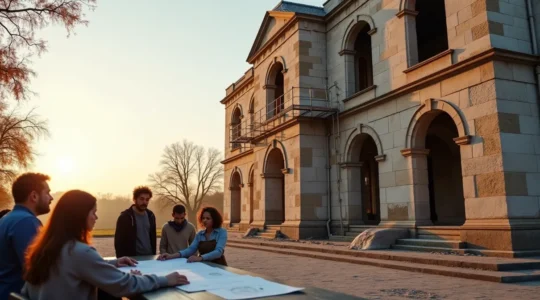
How to Fund Heritage Preservation Projects Through Modern Crowdfunding?
Successfully crowdfunding a heritage project hinges on translating complex, often invisible, technical needs into compelling and transparent investment stories. Traditional fundraising often fails because it focuses on the aesthetic outcome, neglecting the crucial—and costly—conservation science that truly saves a building….
Read more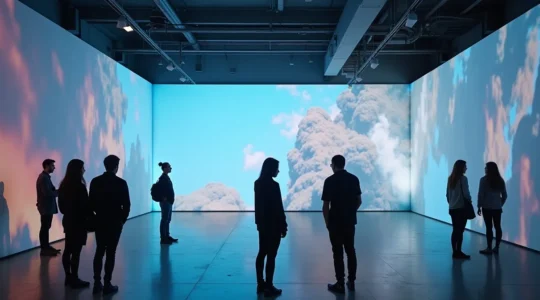
How to Create Profitable Immersive Digital Exhibitions in Small Venues?
The key to a profitable immersive exhibition isn’t a massive budget; it’s a smarter business model built on strategic trade-offs across technology, content, and marketing. Technology choices should prioritize long-term value and targeted impact over raw power, especially in smaller…
Read more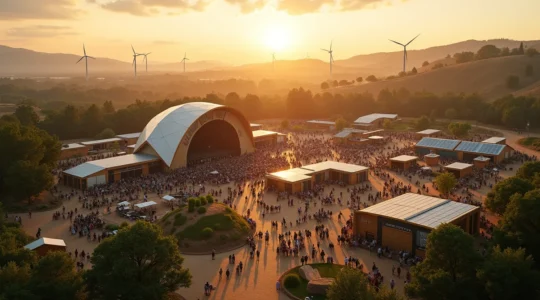
Carbon-Neutral Festivals: The Producer’s Playbook for Profitability
The key to a profitable carbon-neutral festival isn’t spending more on green initiatives; it’s building a circular economic system where sustainability drives revenue and efficiency. Integrate sustainability directly into core operations like ticketing, supply chains, and crowd management to unlock…
Read more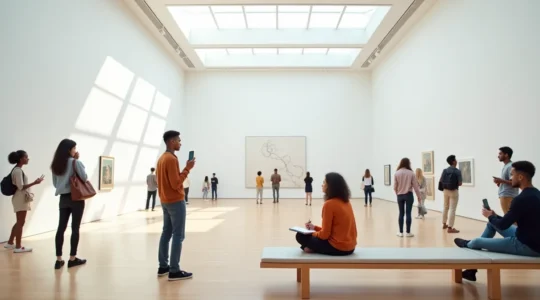
How to Design Museum Narratives That Engage Generation Z Visitors?
Engaging Gen Z is not about adding more tech, but about designing better stories. The key is to shift from static displays to creating immersive, controllable “narrative flows” that channel their fragmented attention. Instead of fighting short attention spans, create…
Read more
From Relics to Revenue Engines: A New Playbook for Urban Revitalization Through Culture
The prevailing belief that simply building cultural venues will revive a city’s economy is fundamentally flawed; true revitalization hinges on re-engineering these institutions from within to become platforms for shared community wealth. Cultural institutions can generate significant revenue beyond ticket…
Read more
The New Monumentality: Integrating Sustainable Materials in Large-Scale Sculpture
Contrary to common belief, creating significant sustainable sculpture is not about choosing eco-friendly materials; it’s about mastering the engineering of their entire lifecycle. Structural integrity, not just aesthetics, must dictate the use of unconventional materials like recycled polymers or bio-composites….
Read more
How to Engineer a Signature Painting Style That Attracts Galleries and Collectors
In summary: A signature style is an “artistic brand” you strategically build, not just something you discover by chance. Material choices, such as using archival linen and quality paints, signal professionalism and directly increase collector confidence and artwork value. Your…
Read more